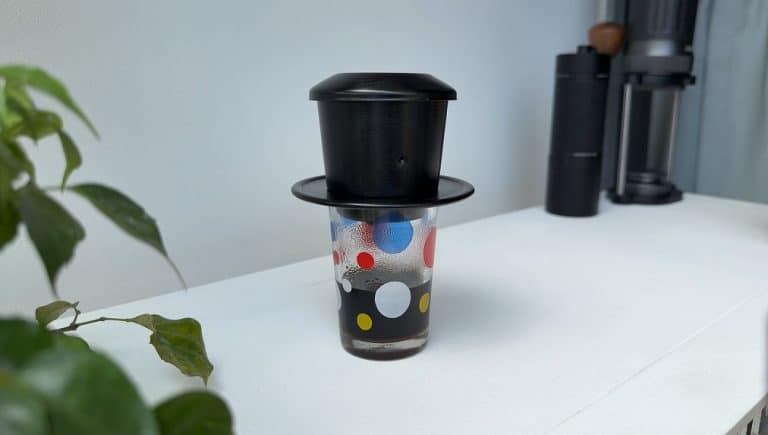
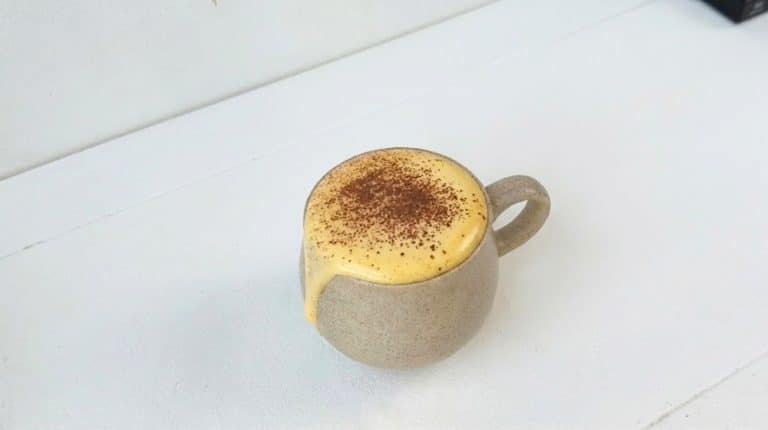
What is a Phin Filter and How to Use It?

The phin filter is an iconic symbol of Vietnamese coffee culture with over a century of history. If you ask “What characterizes Vietnamese coffee?” the common answer is Robusta coffee brewed with a phin, mixed with sweetened condensed milk. Trust me, its taste will be quite different from any coffee you’ve tried before, and this uniqueness comes from the distinctive phin brewing method.
What is a Phin Filter?
The phin is a traditional Vietnamese coffee brewing device. It’s a filter with multiple small holes at the bottom, typically made of metal, most commonly aluminum or stainless steel.
Structure of a Phin Filter

Although phins can be made from various materials and come in different sizes, they always consist of 4 components:
- Filter chamber: Holds the coffee grounds and water, with small round holes drilled at the bottom
- Press disc: Used to compress the coffee grounds
- Drip plate: The bottom section with small holes that allows coffee to drip through and helps stabilize the phin
- Lid: Used to retain heat
When brewing, ground coffee is placed in the phin, hot water is poured in, and the coffee slowly drips through the base, creating a rich, aromatic cup with an unmistakable characteristic flavor.
How to Use a Phin Filter
What You’ll Need:
Equipment:
- Phin filter
- Glass
Ingredients:
- 20 grams medium-coarse ground coffee
- 80ml hot water at 95°C (203°F)
- Optional: 25g sweetened condensed milk (for iced milk coffee)
Brewing Steps:
Step 1: Rinse the phin with hot water to improve heat retention

Step 2: Place the phin on your glass, add 20 grams of coffee grounds, and shake gently to distribute evenly across the surface

Step 3: Pour 30ml of 95°C hot water evenly over the coffee surface, cover with the lid, and let bloom for 40 seconds
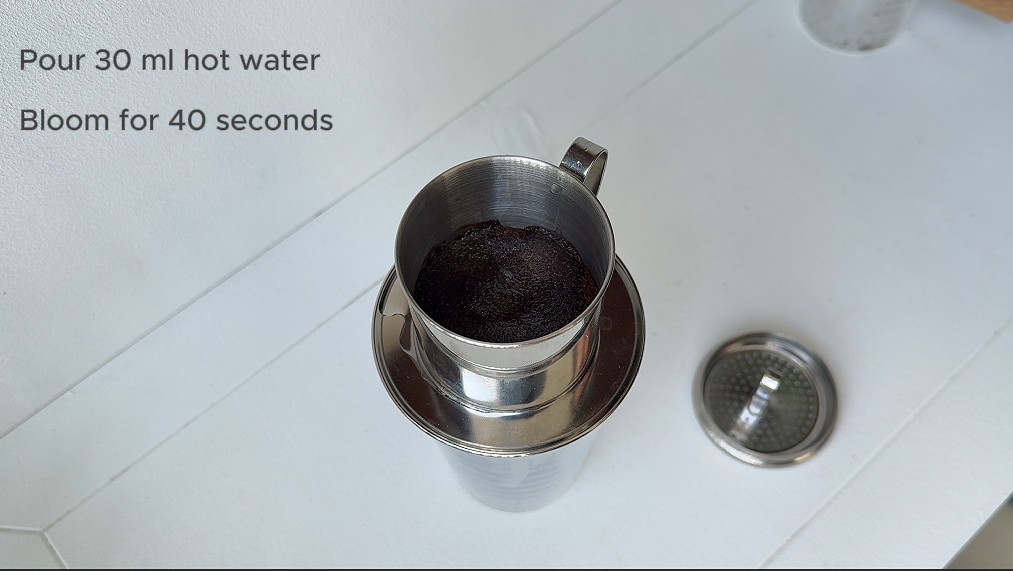
Step 4: After blooming, the grounds will expand evenly. Gently press down with the press disc to compress the coffee, then add the remaining 50ml of hot water, cover, and wait for extraction
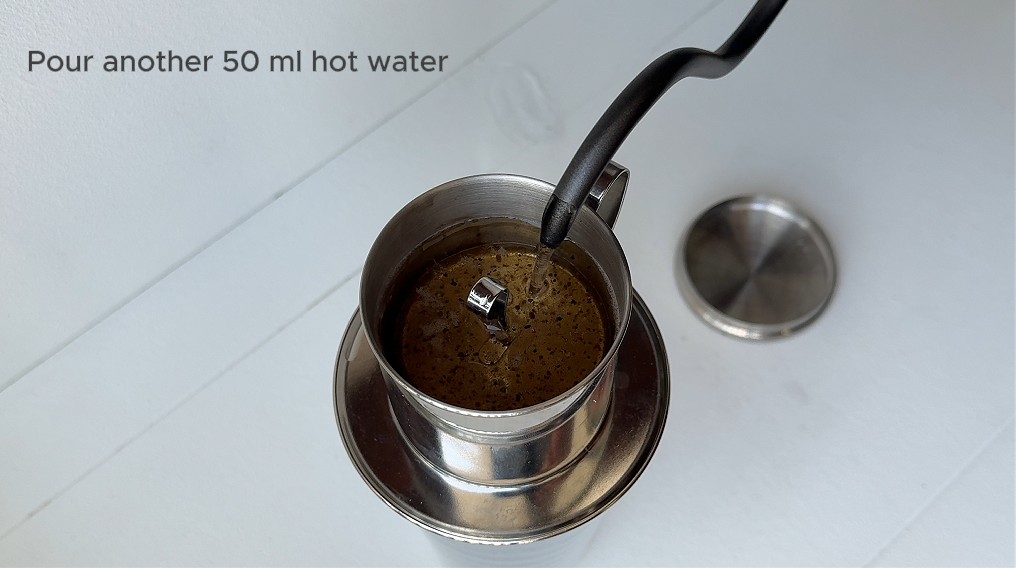
Step 5: Coffee will drip into the cup – the ideal rate is 1 drop per second. You’ll get approximately 40ml of coffee concentrate after 5-7 minutes

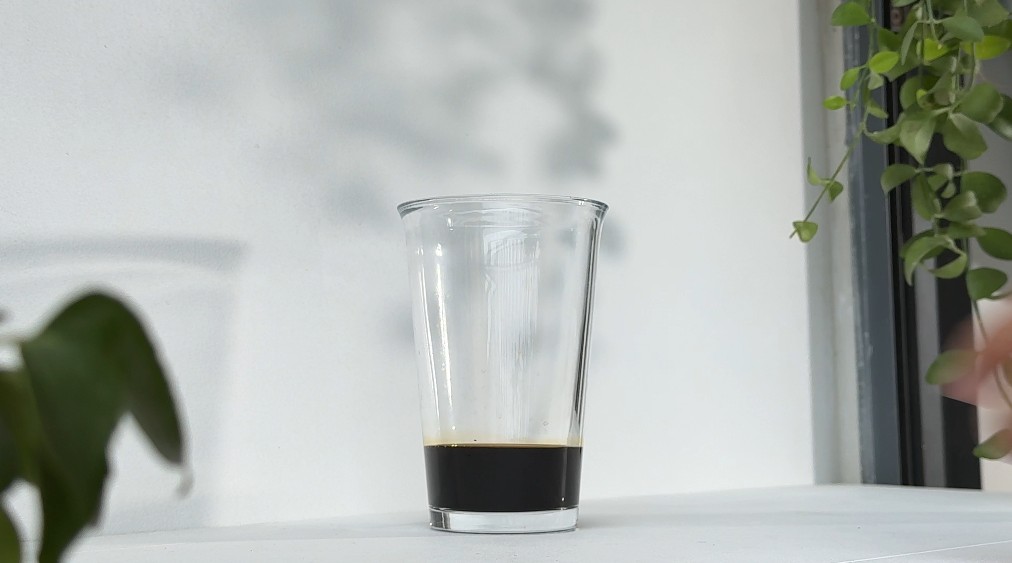
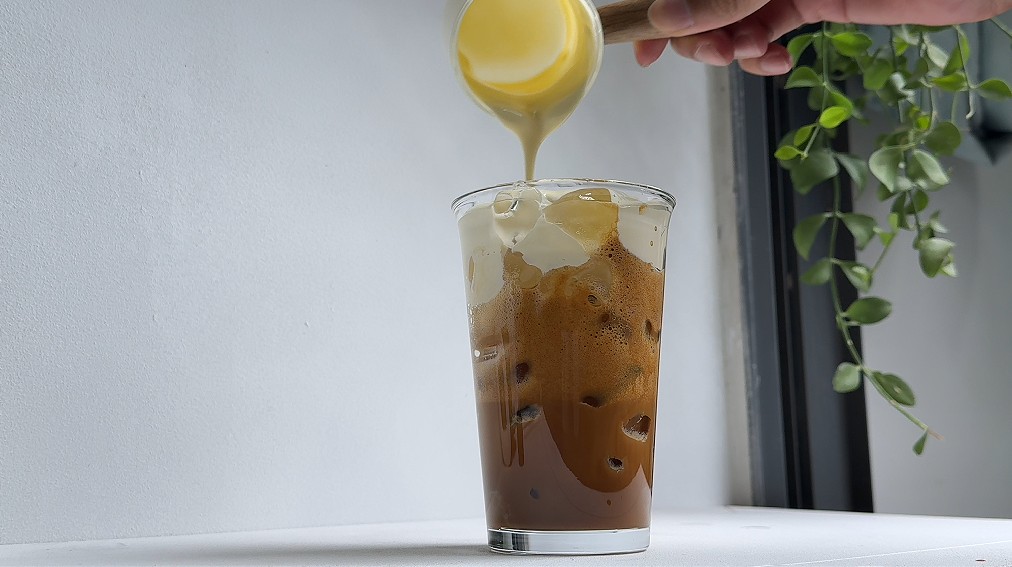
Step 6: Once extraction is complete, remove the phin, add sweetened condensed milk and stir well, add ice, and enjoy
Ideal Coffee Grind Size for Phin
Medium-coarse grind is most suitable for phin brewing. This size allows for the most effective extraction while preventing the coffee from becoming too weak or clogging the flow.
Grind size comparison: Espresso < Phin < Pour over
Common Questions
Why is my phin clogged/not dripping?
Two factors can cause your phin to clog:
- Grind size too fine: If your coffee is ground too fine (like espresso), it will block the holes and prevent water flow. Make sure you’re using a medium-coarse grind.
- Too much compression: Pressing the press disc too hard compacts the grounds excessively, blocking water passage. Apply gentle, even pressure.
Why is my phin dripping too fast?
Fast dripping usually means:
- Grind size too coarse: If grounds are too coarse, water flows through too quickly without proper extraction, resulting in weak, under-extracted coffee.
- Not enough compression: If you don’t press the grounds at all or press too lightly, water will flow through too fast.
Can I adjust the phin coffee ratio for a lighter taste?
The golden ratio for Vietnamese-style coffee is 1:4 (1 gram of coffee to 4 milliliters of water) for a strong brew. For a lighter taste, use a 1:6 ratio.
How to Choose the Right Phin
I own several types of phins, but if I had to choose one, I’d pick an aluminum phin, size 7 (single-serving size).
There are 2 main factors to consider when choosing a phin: material and size.
Phin Materials
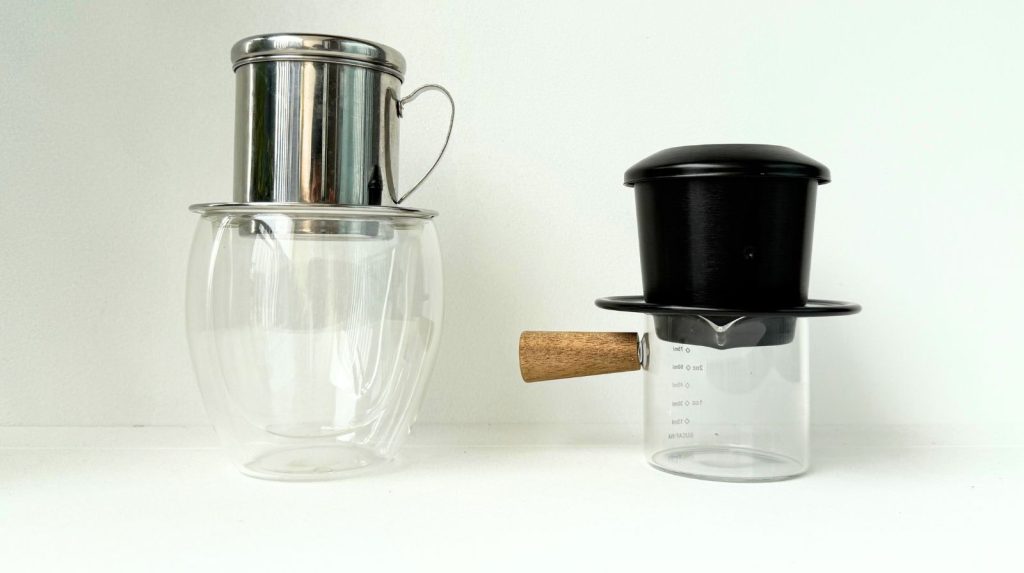
Traditional Vietnamese phins are made from aluminum. Later, other materials became available, each with its own advantages:
- Aluminum: Stable heat conduction and retention, produces quality coffee, affordable, highly durable
- Stainless Steel 304: Similar to aluminum but more expensive, very durable, shiny, easy to clean
- Plastic: Variety of colors, lightweight, highly durable, some modernized versions look very attractive
- Ceramic: High aesthetic value, looks premium, excellent heat retention, higher price point
If you’re just starting out, choose aluminum or stainless steel 304.
Phin Sizes
Phins come in various sizes suitable for single servings, family use, or commercial purposes. Choose based on your needs according to the size chart.
|
Size |
Coffee Grounds |
Water Volume |
Servings |
Best For |
|
6 |
15 – 20 g |
60 ml |
1 cup |
Individual |
|
7 |
20 – 25 g |
80 ml |
1 cup |
Individual |
|
9 |
35 – 40 g |
150 ml |
2 cups |
Small family |
|
13 |
80 – 90 g |
320 ml |
5 cups |
Café use |
How to Clean Your Phin
Phins are extremely easy to clean and maintain. After brewing, simply discard the coffee grounds, rinse the phin thoroughly with water, and let it air dry. For stainless steel or aluminum phins (non-anodized), if you want to keep them shiny, wipe them dry immediately after washing.