
How to Choose Good Coffee Beans
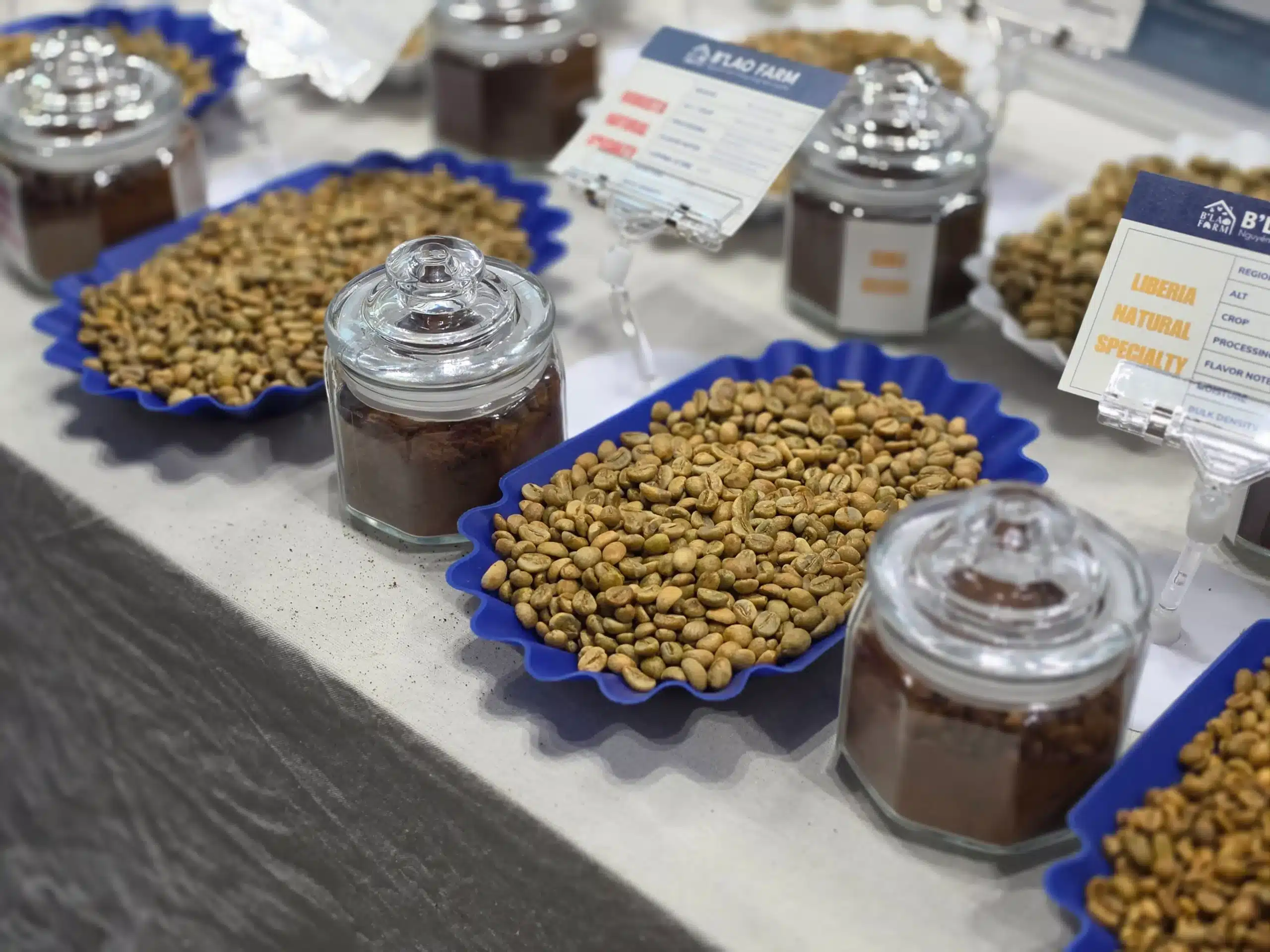
You can own a great grinder and a perfect kettle and still brew a bad cup. The beans decide most of the result. Technique and gear can polish a good coffee. They cannot rescue a bad one.
I have bought my share of bad bags. Pretty label, no roast date, and a cup that tasted flat no matter how carefully I brewed it.
The good news: this skill is easy to learn. You need to know what to look for on the bag, and how to keep the coffee once it is home. That works whether you brew espresso, pour over, French press, or filter.
Table of Contents
What Does “Good Coffee” Actually Mean?
I put “good coffee” in quotation marks because it has no single definition. Some people love bright, fruity acidity. Others want something dark, bitter, and a little smoky. Both are right.
So the goal here is not to tell you which beans to like. It is to help you buy beans that match your taste, and to avoid bags that went stale before you opened them.
Freshness: The First Thing to Check
Freshness affects your cup more than anything else on the label. It is also the detail people skip most often.
Check the Roast Date First
Why freshness matters
Coffee does not spoil like milk. Drinking it a year or two after roasting is still safe. Safe is not the same as good. As coffee ages, three things happen:
- It loses aroma. The volatile compounds that give coffee its smell and flavor escape from the bean into the air. Good packaging slows this down but never stops it.
- It develops off flavors. The compounds that make coffee taste good keep reacting with each other. Over time they form new ones, and those usually taste worse than the originals.
- It goes rancid. Coffee contains oils. Oxygen oxidizes them and moisture breaks them down, and both produce unpleasant flavors. Dark roasts push more oil to the surface of the bean, so they turn faster.
Heat speeds up all three. Keep your coffee cool.
Why “best before” tells you almost nothing
Most supermarket bags show a “best before” date, and there is no standard for it. Some brands print 12 months after roasting, others 18, others 24. Two bags with the same date can be months apart in freshness.
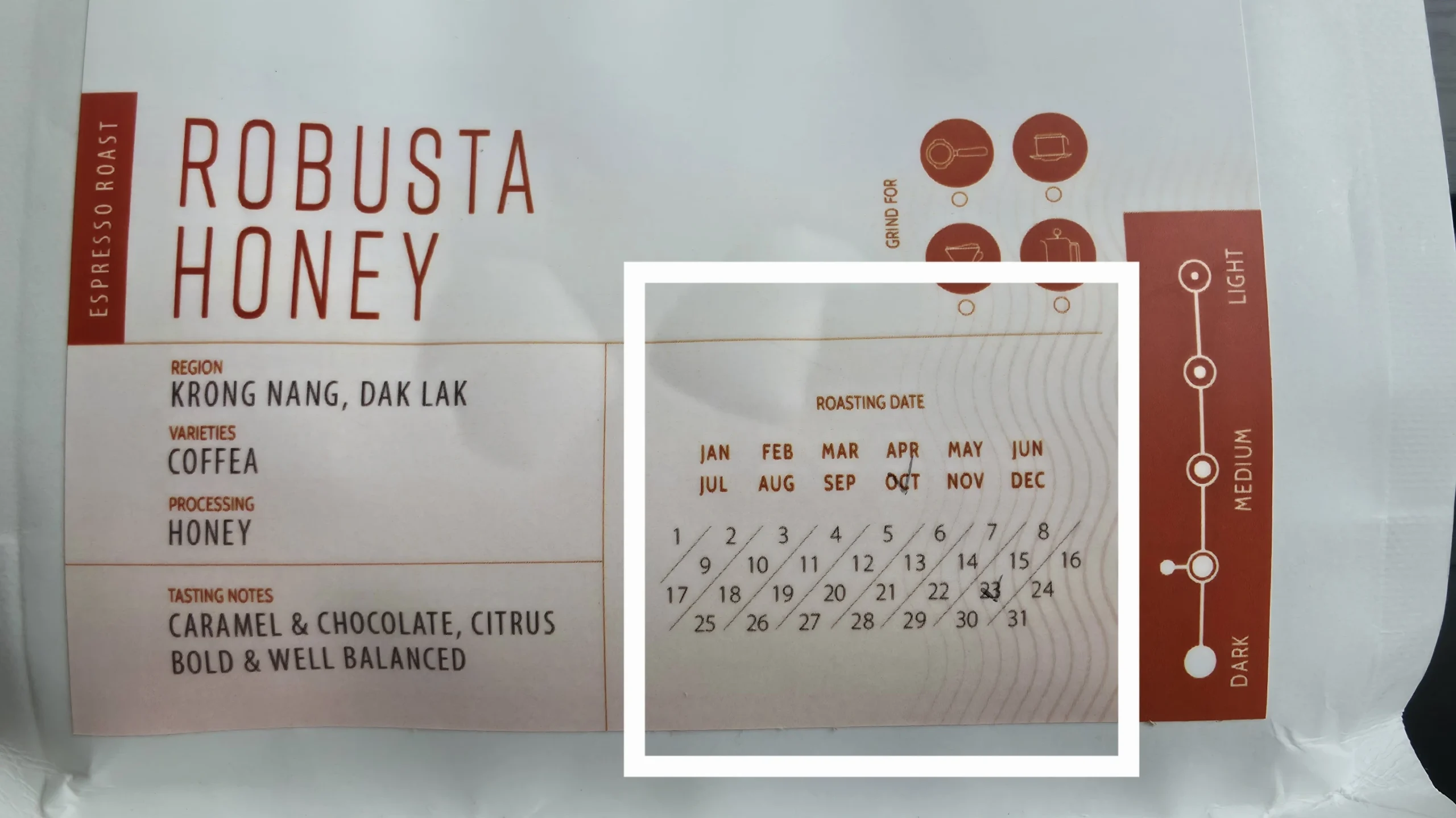
Look for the roast date instead. Before anything else, I flip the bag over and search for it. If I cannot find one, the bag goes back on the shelf.
Coffee Can Be Too Fresh
This sounds backwards after everything above, but coffee that just came out of the roaster is not at its best either.
Roasting produces a lot of carbon dioxide, roughly one liter for every 100 grams of coffee. Most of it escapes during roasting and in the first hours after. What stays in the bean is small by comparison, but it still changes how the coffee brews. When hot water hits the grounds, the CO2 bursts out and pushes the water away. The water cannot extract evenly, and you get a sharp, uneven cup. This is most obvious with espresso.
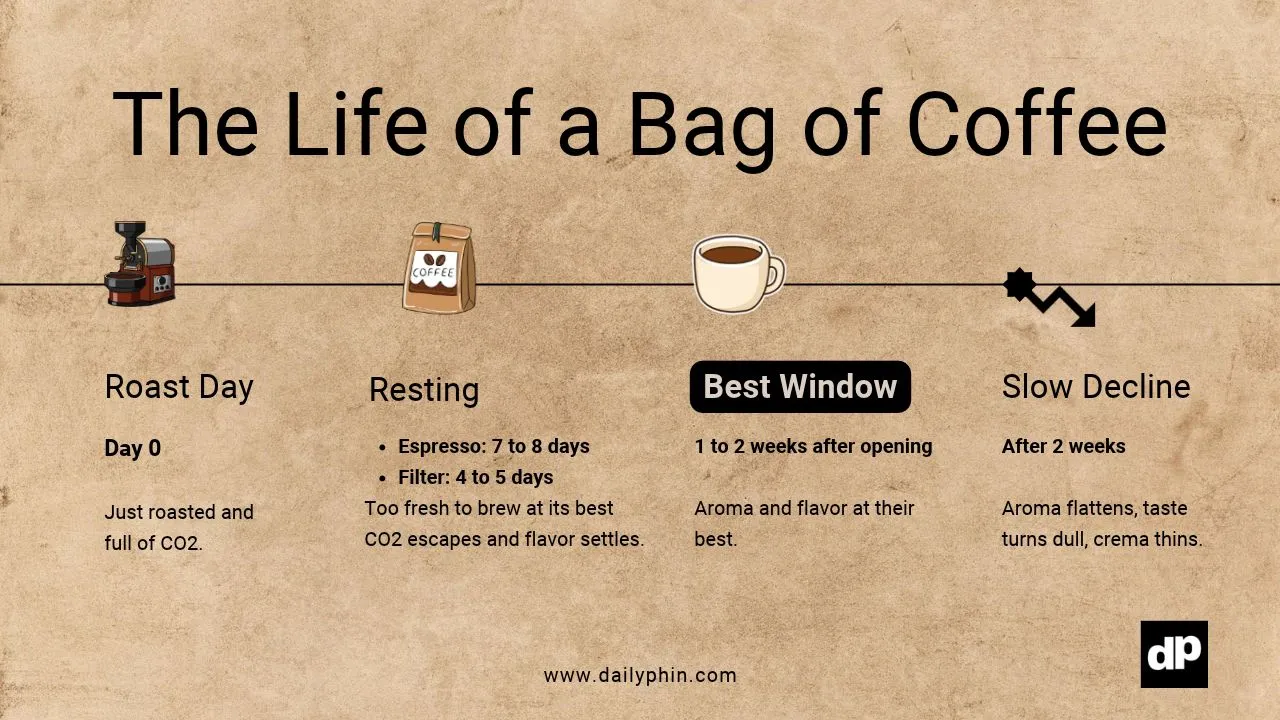
That is why roasters let coffee “rest” before you brew it. A rough guide:
- Espresso: wait about 7 to 8 days after the roast date.
- Filter methods (pour over, drip, phin): about 4 to 5 days. Freshness matters less here, and many people brew well from day 2 or 3.
- After you open the bag: you usually get 1 to 2 weeks of the best cups. After that, quality slowly drops.
Early in my barista days, I pulled espresso from beans roasted only two days before. The crema looked huge, the shots ran unevenly, and the taste was sharp and hollow. The same beans a week later were a different coffee.
You will also notice crema thinning over those two weeks. Crema is trapped CO2, so less of it does not mean the coffee went bad.
Here is the uncomfortable part. The staler the coffee, the easier it is to brew, because the CO2 is already gone. Easy to brew does not mean good to drink.
If you order online, your coffee often arrives very fresh, since roasters ship quickly. Plan for the rest time and let the beans settle before you brew.
Whole Beans vs. Pre-Ground Coffee
Buy whole beans. Whole beans stay good for much longer. The moment you grind, you expose far more surface to air, and the staling reactions start fast.
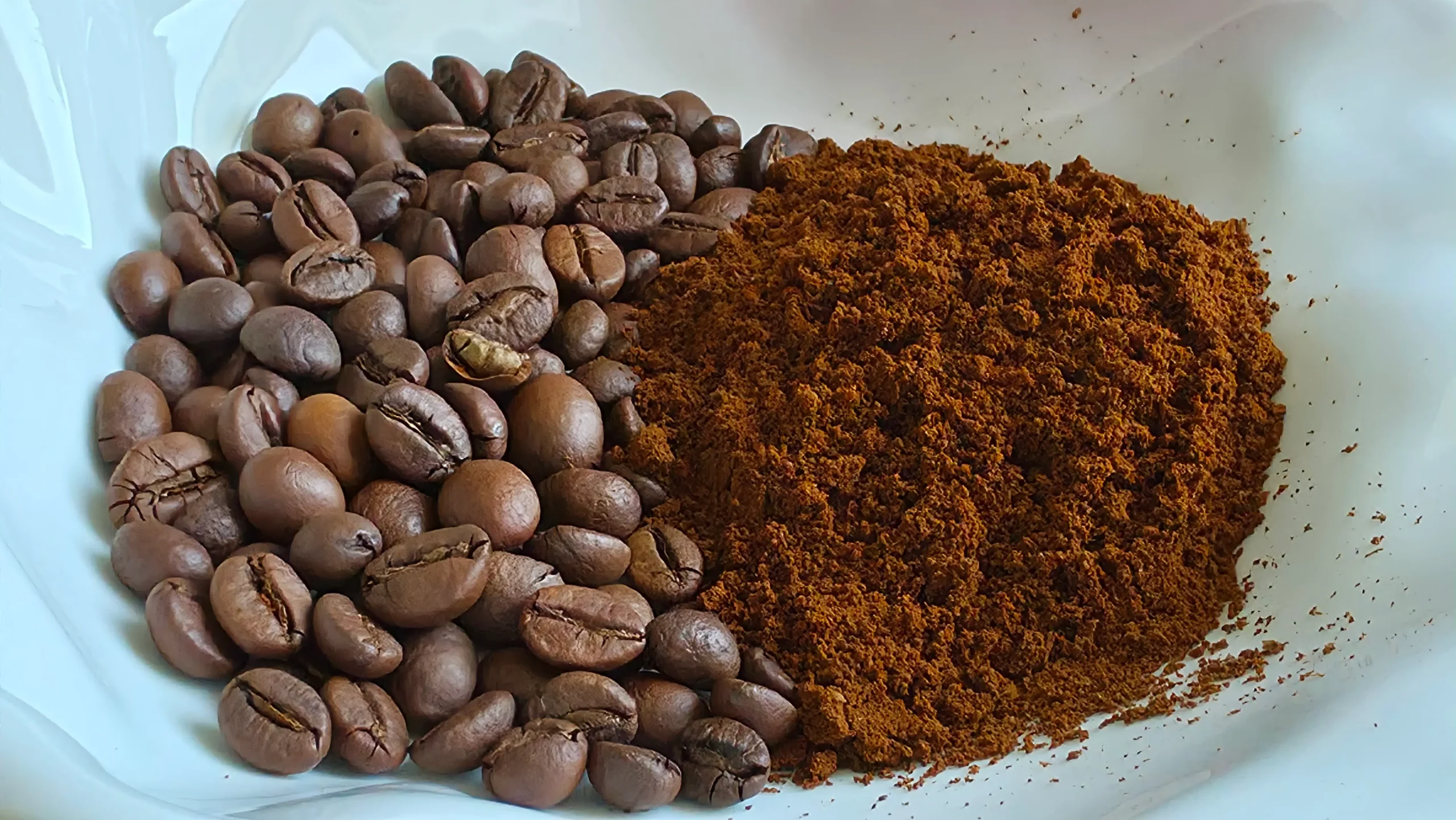
At the coffee shop where I worked, we ran side-by-side tastings. Many people could tell coffee ground 12 hours earlier from freshly ground. Almost everyone noticed the difference at 24 hours. At 48 hours, it was easy to find someone who thought the older cup tasted worse.
Three more reasons to buy whole:
- Better value. Pre-ground coffee can cost the same as whole beans, but it brews worse. You pay the same for less.
- Control over grind size. You can adjust it for each bean, brewing method, and your own taste.
- The smell. Freshly ground coffee smells amazing, and it makes the morning better.
Grinding at home has costs. It takes a little time, and you need a grinder. Still, I think a grinder is the best money you can spend in a coffee corner. I grind right before every brew. If a grinder is not in your budget yet, ask the shop to grind the bag when you buy it, and finish it within a week or two.
Choose a Roast Level That Matches Your Taste
Roast level shapes flavor more than most people expect. The longer a bean roasts, the more “roasty” flavor it builds, the kind you find in toast or chocolate. Roast further and those flavors turn smoky, harsh, then burnt. Bitterness climbs along the way, because sugars get more bitter as they darken toward deep caramel. Acidity, the bright and tangy side of coffee, drops.
| Roast level | What to expect | Good for |
|---|---|---|
| Light | Bright acidity, fruity or floral notes, light body | Pour over, filter |
| Medium | Balance of sweet, sour, and bitter | Most brewing methods, a safe pick for beginners |
| Dark | Bitter, smoky, low acidity, heavy body | Espresso, milk drinks |
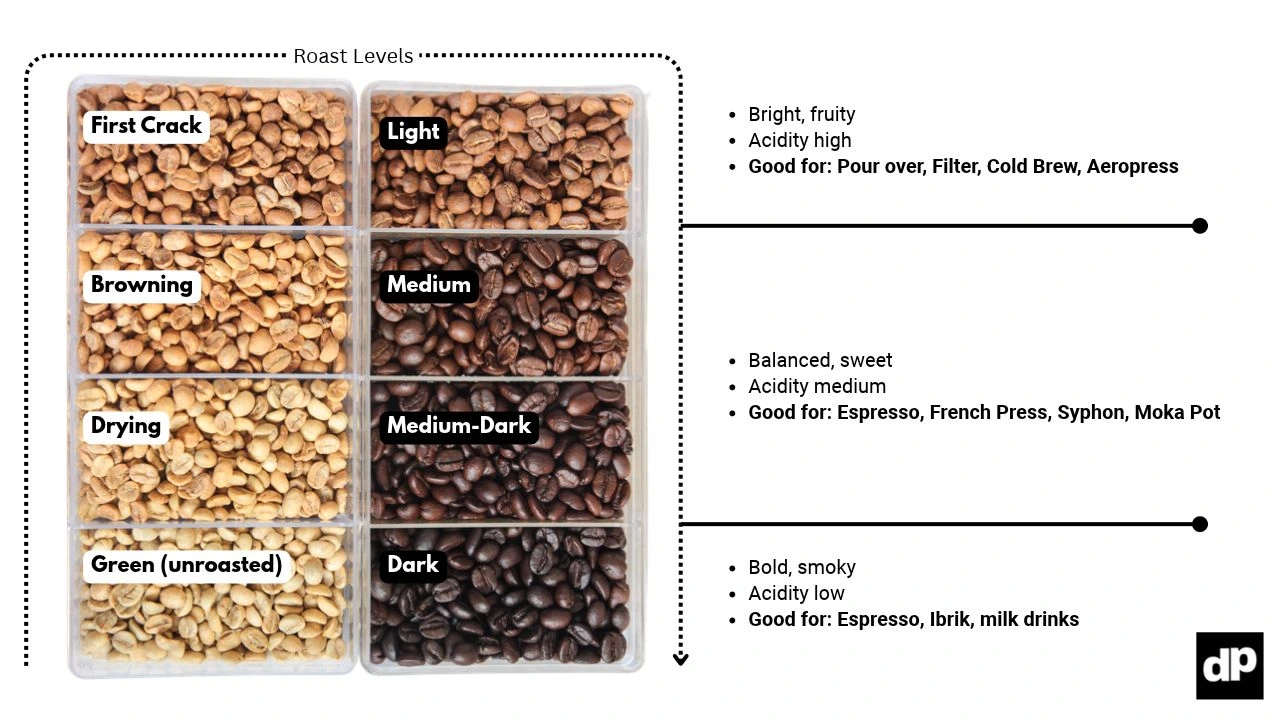
Two points will save you confusion at the shelf.
There is no universal standard for “medium roast.”
Every roaster starts from a different point on the color scale. A “light roast” from a big chain can be darker than a “medium” from a specialty roaster. Do not trust the label alone. Read the flavor notes and ask the person selling it.
Acidity does not mean sour.
Coffee people argue about acidity a lot. In general, complex coffees tend to have higher acidity, and good acidity brings brightness and contrast to the cup. It only turns harsh when the roast is done badly.
Altitude plays a role too. Coffee grown high up matures slowly and grows denser, and it often tastes more complex and sweeter. Higher is not always better, though, so do not choose a bag just because of its elevation number.
For the roaster, the job is to keep as much of the bean’s own character as possible, add a pleasant roasted base, and balance the acidity. Finding that balance takes skill, and nobody fully agrees on where it sits. That is why every roaster has a house style, and why you may like one roaster’s taste more than another’s.
I grew up in Dak Lak, where most farms grow robusta, and where Vietnamese coffee is traditionally roasted dark.
Robusta tends to taste bolder and more bitter, and it holds up well against dark roasting and against milk and sweetened condensed milk, which is why it shines in a classic Vietnamese iced coffee. Dark roast is not a flaw. It is a style, and it fits some beans and some drinks better than others.
Best Coffee Beans for Your Brewing Method
If you already know how you brew, start here. Each method pulls flavor out of the bean differently, so some roasts and grind sizes suit it better than others.
|
Brewing method |
Roast Level |
Grind size |
Rest after roasting |
|---|---|---|---|
|
Espresso |
Medium to dark |
Fine |
7 to 8 days |
|
Pour over / drip |
Light to medium |
Medium |
4 to 5 days |
|
French press |
Medium to dark |
Coarse |
4 to 5 days |
|
Phin (Vietnamese drip filter) |
Dark |
Medium to coarse |
4 to 5 days |
|
Cold brew |
Medium to dark |
Coarse |
4 to 5 days |
Treat these as starting points, not rules. Taste the result, then adjust the roast or the grind. The rest times follow the espresso and filter guide above.
How to Read Flavor Notes on a Coffee Bag
A line like “blueberry, jasmine, caramel” is not an ingredient list. It describes what the roaster tasted in the cup. You can also read it as a rough map of acidity and body:
| Words on the bag | What to expect |
|---|---|
| Fresh fruit: berries, apple, pear, citrus | Fairly high acidity, light to medium body. Can taste sweet, but skip it if you dislike tang. |
| Tropical fruit: mango, lychee, pineapple, strawberry, blueberry | Often a sign of fermented flavors, slightly heavier body. If that style is not for you, pass. |
| Cooked fruit: jam, jelly, cherry pie | Some acidity but not dominant, thicker body than the high-acid group. |
| Browned flavors: chocolate, nuts, caramel, toffee, with no fruit | Low acidity, medium to heavy body. Easy to drink, great for beginners. |
| Bitter notes: smoke, dark chocolate, molasses | Dark roast, heavy body, little to no sourness, bitterness leads. |
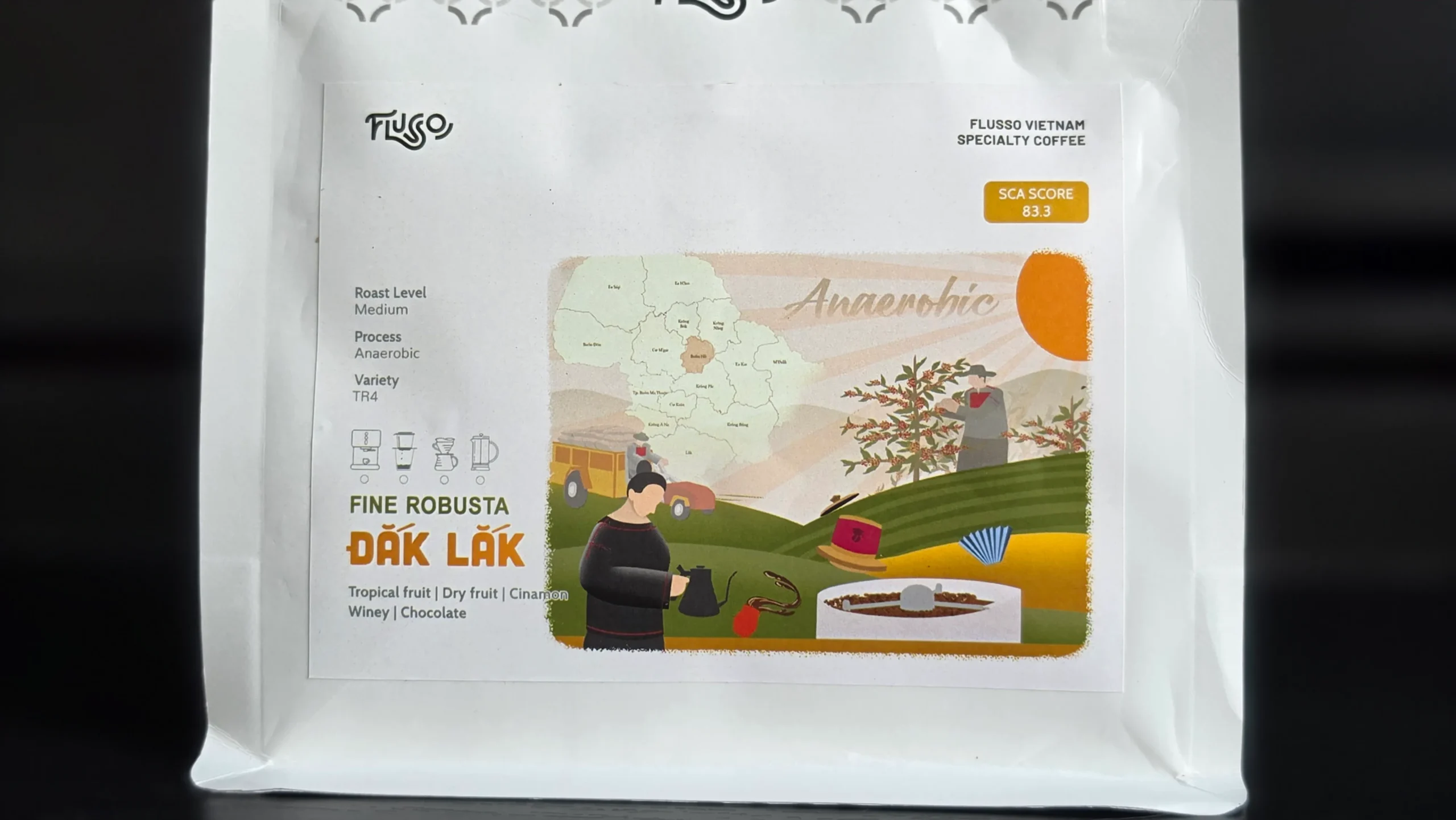
This table is a rough guide. It will not be exact, and it cannot replace a conversation with someone who has tasted everything they sell. It will help you avoid a bag you end up forcing yourself to finish while secretly wanting to throw it out.
Do experiment, too. Part of the joy of coffee is how varied it is, and one cup can surprise you in many ways. Use this guide to explore without the risk of a bad buy.
Where to Buy Coffee Beans
Where you buy affects freshness more than most people realize. Here are the three common options.
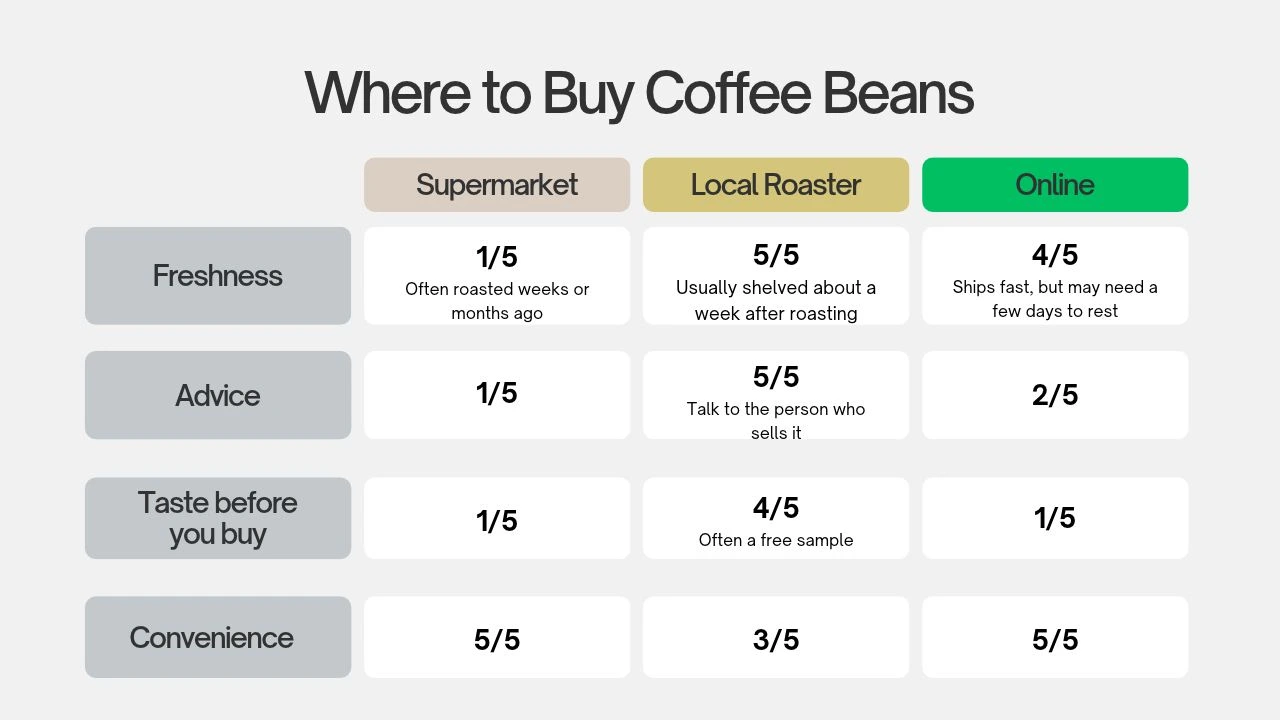
Supermarkets and grocery stores.
For decades, this is where most people bought coffee, and stores treat it like a shelf-stable product. By the time a bag reaches the shelf, it may have been roasted weeks or months earlier. Stock often gets pushed to the back and slowly moves forward. Big brands rarely print a roast date, partly because retailers do not want them to. A few smaller, quality-focused roasters now print both dates, but the roast date is often tiny and hard to spot. Honestly, finding truly fresh coffee in a supermarket is hard. Some local stores do better, but it is mostly luck.
A local coffee shop or roaster.
This is my favorite, and not only to support local business. Shops usually put bags on the shelf about a week after roasting, so the coffee has already rested and is ready to brew. You can talk to someone about your taste and get a recommendation, which beats guessing from labels. You can often taste before you buy, which lowers the risk of ending up with a coffee you dislike. It also gives you a reference for how that coffee should taste when you brew it at home.
Online.
Buying good coffee online has never been easier. Roasters around the world now ship directly, prices are competitive, and delivery is fast. The trade-off is less human contact, so it is harder to get advice.
Most roasters state their roasting and shipping policy. Smaller ones do not roast daily, so they may hold your order for the next batch or ship coffee that is a day or two old. As I said above, very fresh coffee is not always the best to brew. Still, ordering online gives you a fairly predictable timeline, and you can time your order so the new bag arrives about a week before the old one runs out.
Many roasters also offer subscriptions that ship every week, two weeks, or month. They range from “send me the one I love so I never have to think about it” to “surprise me with something new every time.”
Does Price Really Matter When You Choose Coffee Beans?
Price is the easiest quality signal to read: you get what you pay for. That is not always true, since people define “good” differently. I still want to talk about price, for a different reason.
Think about what a bag of coffee has been through. A tropical plant, grown thousands of miles from your kitchen, then harvested, processed, sorted, exported, roasted, packed, and delivered to your door for a small amount of money. A bag of coffee in the house is normal for hundreds of millions of homes. If you stop and think about it for a minute, it is astonishing.
That low cost created an expectation that coffee should be cheap. But cheap coffee has a very human price. Somewhere in the chain, someone struggles to keep it low: living with no security, not earning enough to get by, or carrying debt they cannot escape. In my view, coffee is underpriced for what it gives us: a delicious, endlessly varied drink that also keeps us alert.
I am not telling you to buy the most expensive bag. Paying extra for the rarest specialty lots will not fix the industry or do much for any single farmer. Paying a sustainable price for everything you buy does matter. The everyday price at specialty roasters is a fair reference point. Try to avoid the huge multinational brands that work hard to push coffee prices down.
I know nobody wants to hear “pay more.” Poverty is common in coffee-drinking countries too, not only in the countries that grow it. But I cannot support keeping prices low when we can see what it does to millions of coffee-growing families. I grew up around those families in Dak Lak. My parents are among them.
How to Store Coffee Beans
Store everyday coffee in an airtight container, somewhere dry and out of the light.
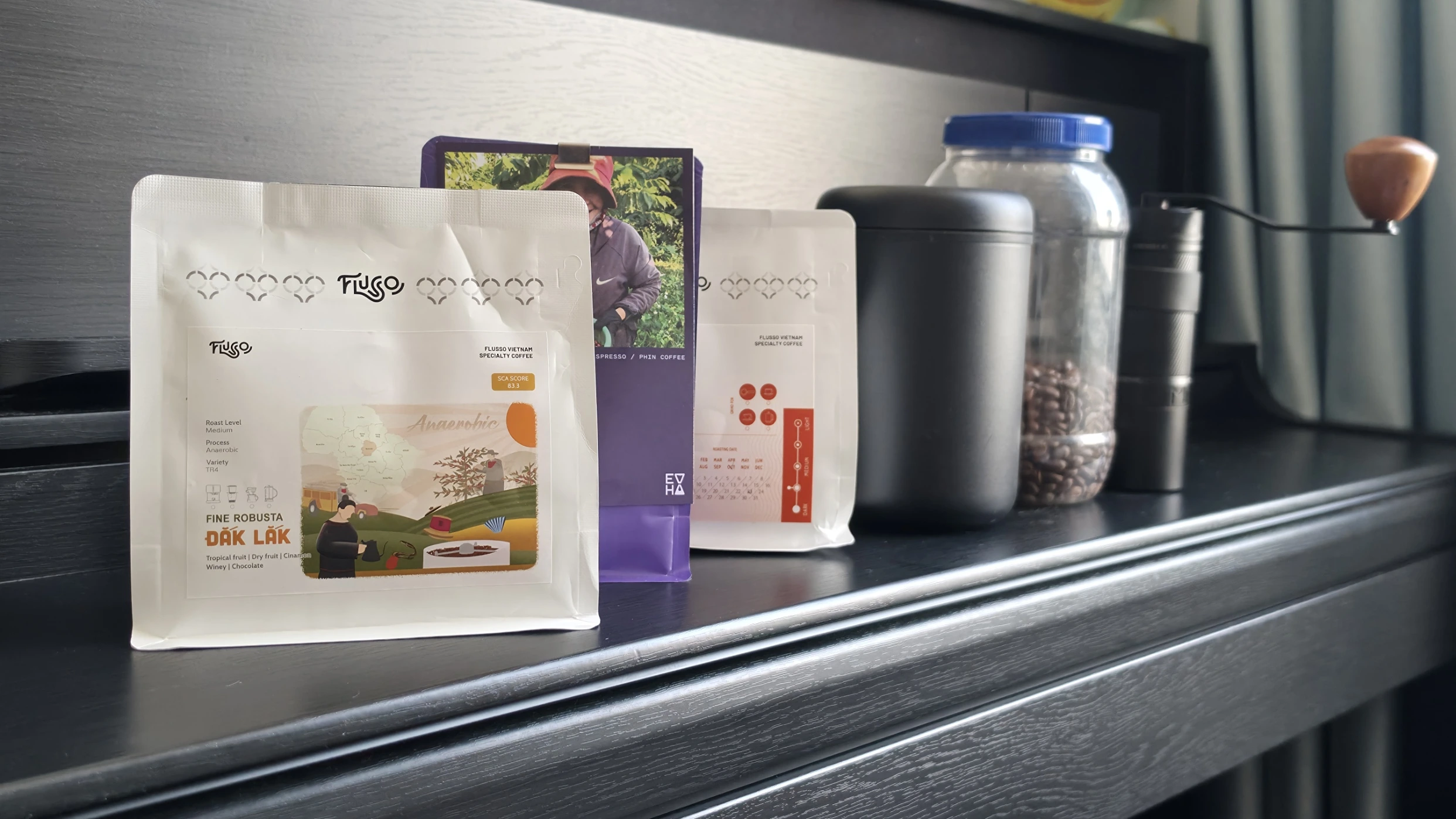
- Containers: many bags now come with a reusable zip, and they work well. A vacuum canister has only a small edge, so pick one you like for looks and price, as long as it seals. I keep mine in the roaster’s zip bag, and I also own a Fellow Atmos vacuum canister. I have not noticed any real difference between the two.
- Skip the fridge. In theory a fridge is cooler than a cupboard and works if the container is truly airtight. In practice, every time you take cold coffee out, moisture condenses on the beans and speeds up staling. A loose bag also soaks up odors from everything else in there.
- Use the freezer for long storage. Coffee sealed tightly, with as little air in the bag as possible, keeps for months in the freezer. Do not take it in and out, because water vapor condenses each time. Many people portion it into small bags, one per brew, and take out only what they need. It works extremely well, though it takes effort and packaging whenever you open a new bag.
Temperature matters a lot. Coffee left somewhere warm goes stale much faster. Keep it somewhere cool, and buy an amount you can finish in 2 to 4 weeks.
Talk to Your Roaster
If you bought a bag and did not like it, tell the seller. Roasters keep opening everywhere, competition is fierce, and most are happy to experiment and build a relationship with customers. They want the chance to hand you something you actually love, and they want to know why a bag let you down. Maybe they do not have the right coffee for you. Knowing that is still better than selling you a second disappointment.
FAQ
How long do coffee beans stay fresh after opening?
About 1 to 2 weeks for the best cups, if you store them properly. Quality then fades gradually.
Can I freeze coffee beans?
Yes. Seal them tightly with as little air as possible, and portion them so you only take out one brew’s worth at a time.
Is pre-ground coffee bad?
Not bad, but it loses aroma faster than whole beans, and you cannot adjust the grind for your brewing method.
How can I tell if my coffee has gone stale?
The aroma turns flat or faint, the taste gets dull, and espresso produces little crema. Rancid, oily smells are a sign the fats have turned.
Your Next Bag
This week, pick up one bag of medium roast from a local roaster. Ask the person behind the counter what they like. Brew it, taste it, and tell them what you thought. Then keep exploring from there.