How to Make Vietnamese Coffee (Authentic Recipe)

Want to brew a cup of Vietnamese coffee that’s as rich and aromatic as what you’d find in a local café? The secret isn’t hidden somewhere far away, it lies in mastering the traditional phin filter technique.
This isn’t just a recipe. This is an A-Z guide to the method that will help you master the phin brewing technique. From here, you can brew ANY type of Vietnamese coffee.
What Makes Vietnamese Coffee Special?
In Vietnam, brewing coffee is a small ritual of slowness and savoring.
There’s no need for modern machinery or complex techniques. Vietnamese coffee is brewed with a simple phin filter and hot water. But this very simplicity creates a bold, lingering flavor that’s hard to forget.
In this guide, let’s explore how Vietnamese people brew phin coffee and understand why even a small cup can capture the entire spirit and habits of a nation.
4 Essential Elements of Vietnamese Coffee
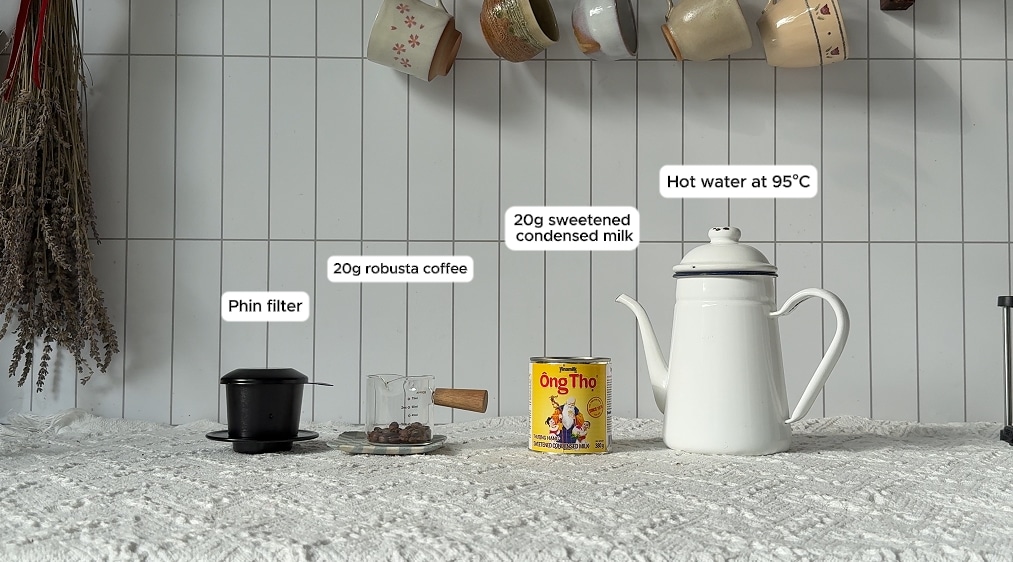
To make an authentic Vietnamese coffee, here are the 4 most important things locals use:
- Robusta beans: The primary coffee type in Vietnam, with a strong bitter and aromatic flavor
- Grind size: Must be medium-coarse, similar to the size of granulated sugar (between pour-over and espresso)
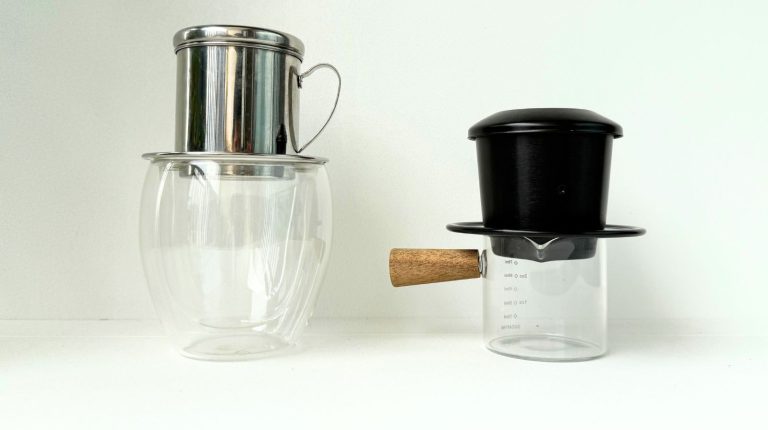
- Phin filter: The traditional brewing device used to extract coffee
- Sweetened condensed milk: Mixed with coffee to create the signature sweet and creamy taste
Understanding the Phin Filter
If you’re hearing about “phin” for the first time, it’s essentially a brewing device used to steep and extract coffee the traditional Vietnamese way. Phin filters are typically made from aluminum (most common), stainless steel, or ceramic.

Components:
- Lid: Covers the filter during the brewing process
- Press disc: Used to gently compress the coffee grounds, controlling flow rate and allowing proper coffee expansion
- Chamber: Holds the coffee grounds and hot water
- Drip plate: A small platform placed on top of the cup with tiny holes that allow coffee to drip through
The standard phin size for a single serving is a 7 cm filter, which holds about 20–25 grams of coffee grounds and yields roughly 50–70 ml of brewed coffee.
How It Works
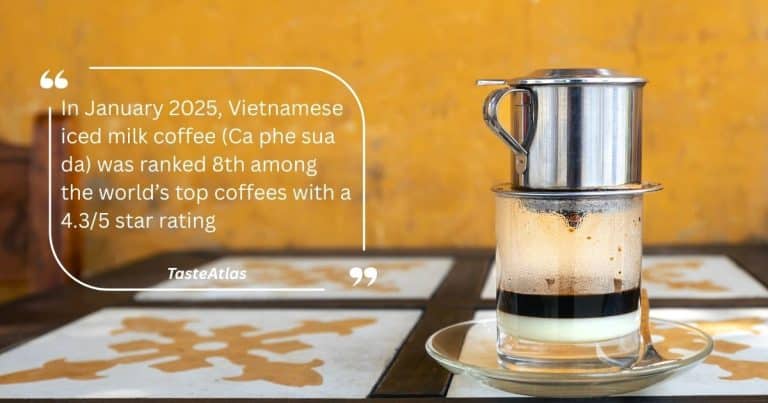
When you pour boiling water in, the coffee steeps in the chamber, then slowly drips through the tiny holes at the bottom. This creates the bold, strong, and thick flavor characteristic of Vietnamese drip coffee.
How to Make Vietnamese Coffee
Here’s how Vietnamese people make an authentic cup of cà phê sữa đá.
Ingredients:
- 20g Robusta coffee (medium-coarse grind)
- 25g sweetened condensed milk
- 80ml boiling water (95°C / 203°F)
- Ice cubes
Equipment
- Phin filter
- Glass
Instructions:
Step 1: Warm the Phin
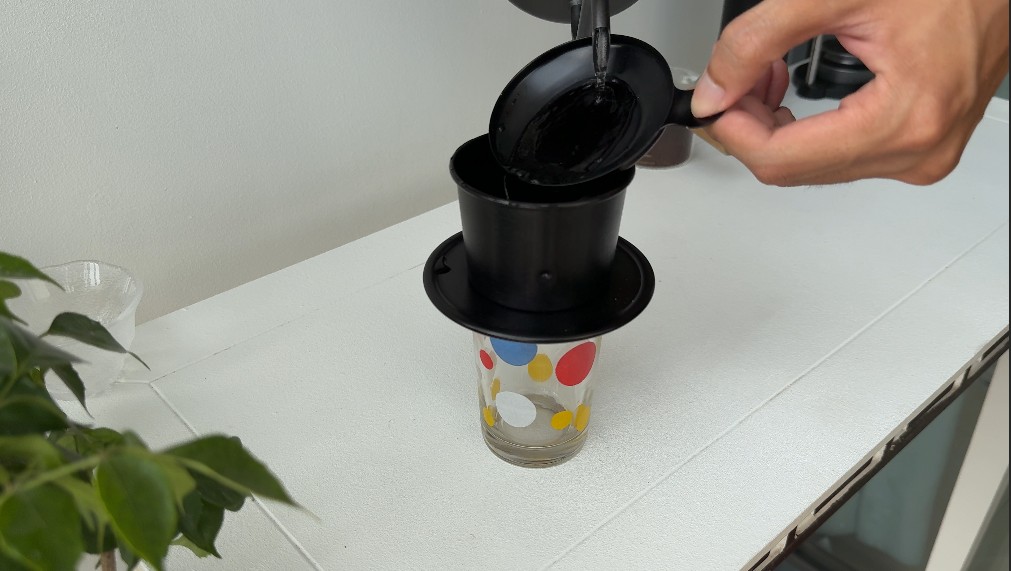
Rinse the phin with hot water to increase heat retention. You can pour hot water into the phin or soak it in hot water for about 10 seconds.
The main purpose of warming the phin is to maintain stable temperature throughout the extraction process, helping the coffee bloom evenly and extract optimal flavor.
Step 2: Bloom the Coffee
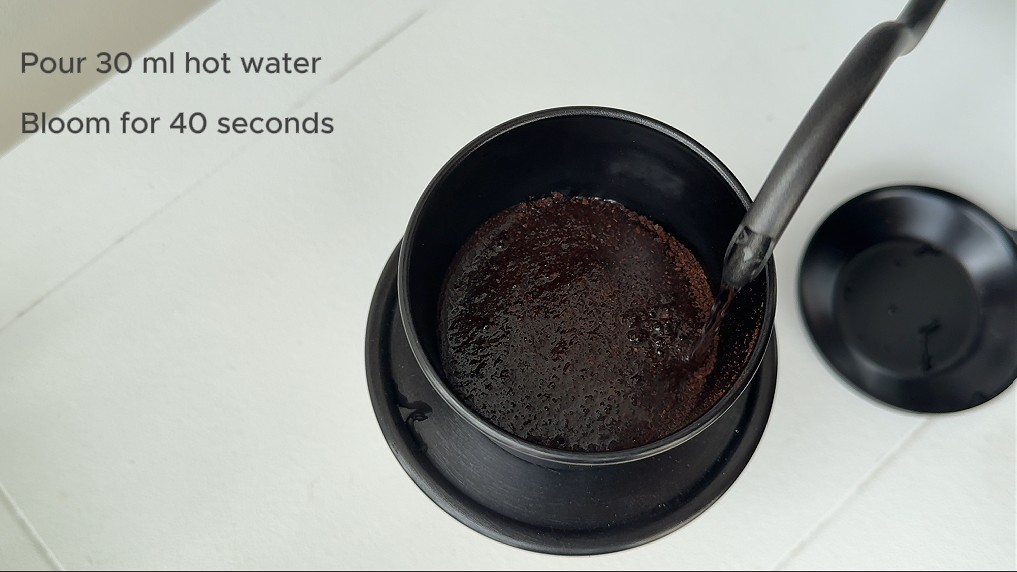
Add 20g of dark roast Robusta coffee (medium-coarse grind) into the phin and shake gently to level. Pour 30ml of boiling water over the grounds and let bloom for 40 seconds, allowing the coffee to expand evenly.
Benefits of blooming:
- Helps coffee expand evenly, increasing extraction rate for a fuller, rounder flavor
- Releases CO2, reducing harsh bitterness
- Prevents clogging as fine particles expand
Step 3: Add Water
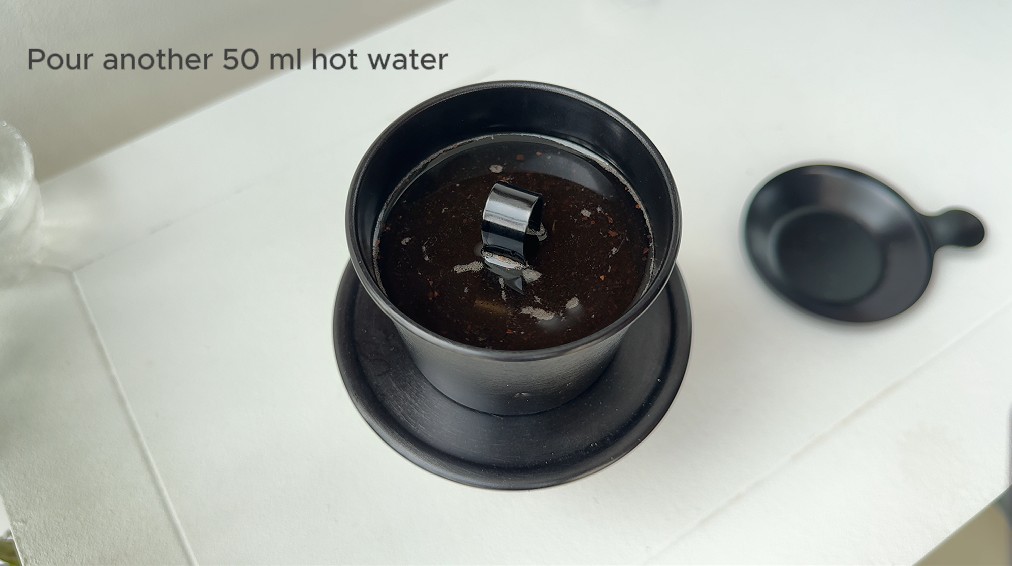
Gently press down the coffee grounds with the press plate, don’t press too hard as this can block the flow.
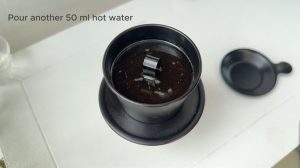
Pour 50ml of boiling water into the phin and close the lid.
Step 4: Wait
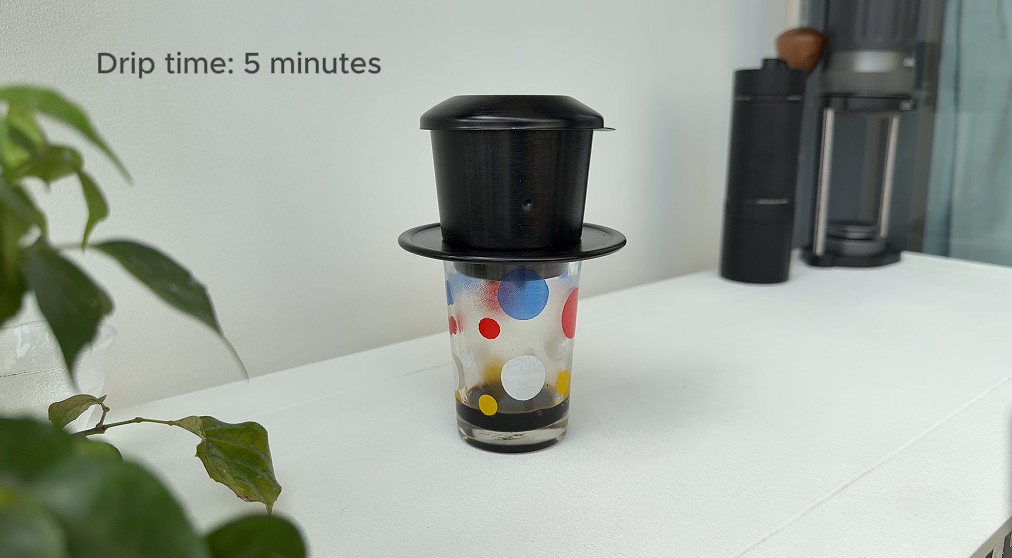
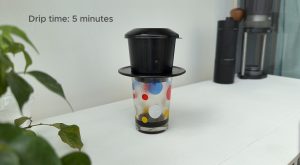
You’ll see coffee starting to drip down. Wait for the extraction to complete until it stops dripping (about 5 minutes).
Step 5: Mix, Add Ice, Enjoy
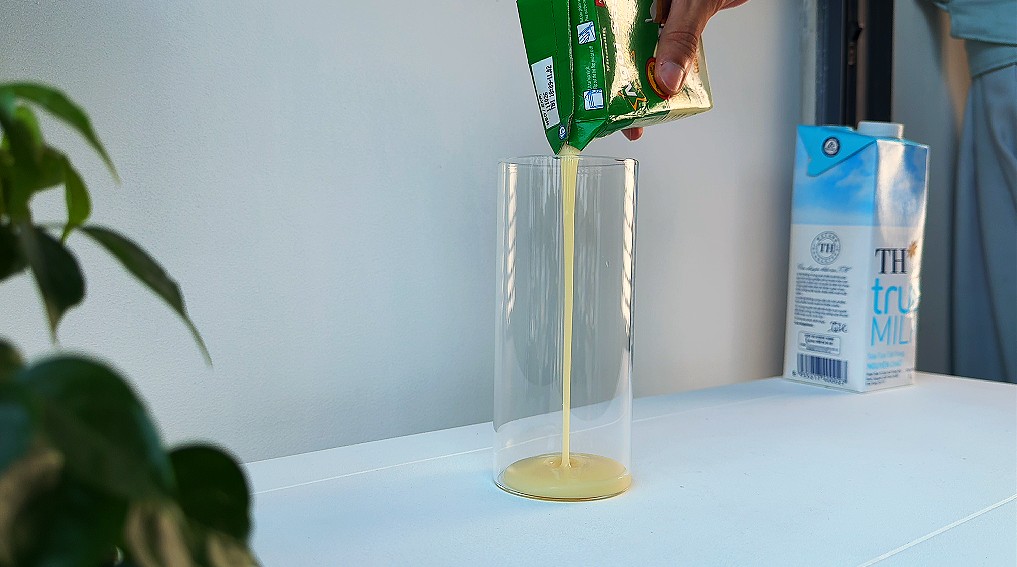
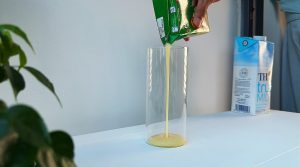
Add 25 g sweetened condensed milk to your glass, stir well, add ice, and enjoy.
Common Mistakes & Solutions
- Coffee drips too fast: Two common causes—grind is too coarse or press is too light.
- Coffee drips too slow: Grind is too fine (like espresso) or press is too tight.
- Coffee tastes weak: Water temperature isn’t hot enough or too much water was used.
Master this technique and you’ll be able to enjoy authentic Vietnamese coffee anywhere in the world.

Vietnamese coffee (Ca phe sua da)
Ingredients
Equipment
Method
- Warm the phin by rinsing with hot water or soaking in hot water for 10 seconds. This maintains stable temperature throughout extraction, helping coffee bloom evenly and extract optimal flavor.
- Bloom the coffee: Add 20g medium-coarse ground dark roast Robusta to the phin and shake gently to level. Pour 30ml boiling water over grounds and let bloom for 40 seconds.
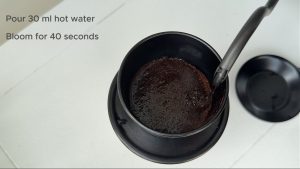
- Add water: Gently press down coffee grounds with the press plate (don't press too hard to avoid blocking flow). Pour 50ml boiling water into phin and close lid.
- Wait: Coffee will begin dripping. Wait until extraction is complete and dripping stops (about 5 minutes).
- Serve: Add 25 g sweetened condensed milk to glass, stir well, add ice, and enjoy.
Notes
- Always bloom the coffee in step 2 to help grounds expand evenly, increase extraction rate, and create a fuller, rounder flavor.
- The grind size is crucial, aim for medium-coarse, similar to granulated sugar texture.
- Don’t over-press the coffee grounds or it will block the flow and create bitter over-extraction.