How to Make Vietnamese Hot Coffee (and Keep It Hot)

Everyone talks about Vietnamese iced coffee as an iconic drink, but few know that Vietnamese hot coffee is an entirely different experience.
A drizzly, cold morning. Your hands wrap around a cup of hot Vietnamese coffee. The aroma of dark-roasted coffee mingles with the rich sweetness of condensed milk. You take a sip and realize, this isn’t just coffee. This is comfort in a cup.
What Is Vietnamese Hot Coffee?
Vietnamese hot coffee (also called cà phê sữa nóng) is a traditional drink made from two core components:
- Hot phin-brewed coffee: Extracted from Vietnamese coffee beans (typically dark-roasted Robusta) through a traditional metal phin filter
- Sweetened condensed milk: Creating the signature sweet, creamy richness
Unlike its refreshing iced counterpart, Vietnamese hot coffee stays warm throughout the drinking experience. Depending on the region, it’s also called “nâu nóng” (hot brown) due to its distinctive deep brown color when stirred. Vietnamese people often enjoy this drink on chilly days, not just to warm the body, but as a soulful ritual.
Make Vietnamese Hot Coffee
Equipment
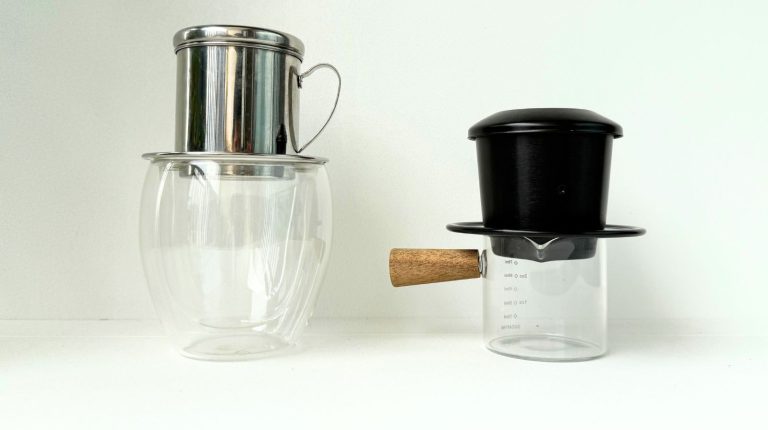
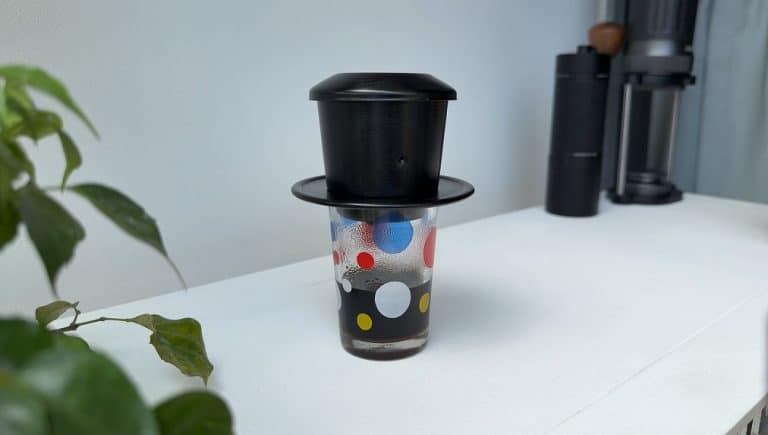
- Vietnamese phin filter
- Thick ceramic cup or double-walled glass
- Bowl of hot water
Ingredients
- 20g Vietnamese coffee ground (Robusta, medium-coarse grind)
- 25g sweetened condensed milk
- 90ml boiling water (90-95°C / 195-205°F)
Step-by-Step Brewing Guide
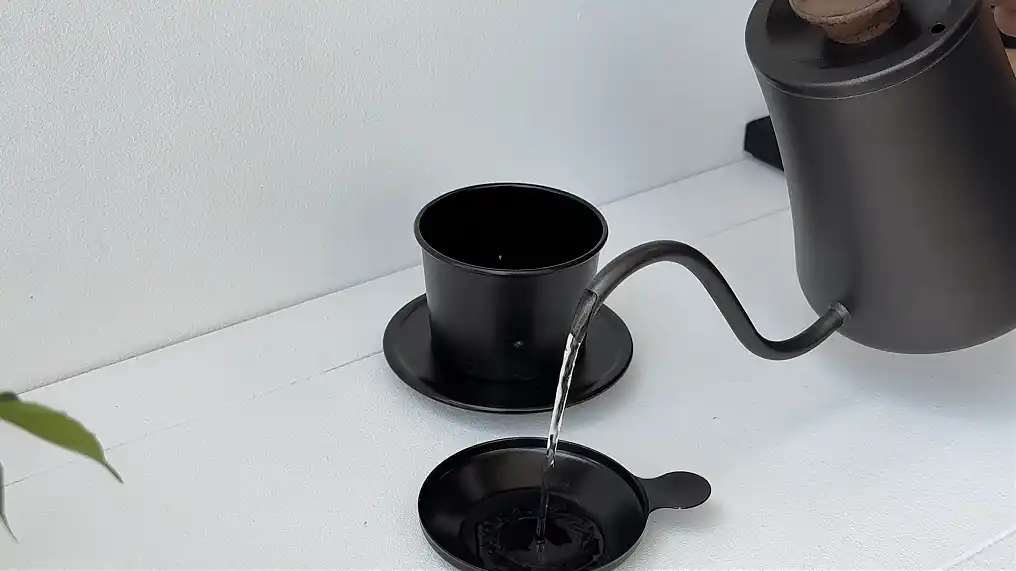
Step 1: Preheat Your Equipment
Before you start, submerge your cup and phin filter in a bowl of hot water. This crucial step helps your equipment retain heat better, ensuring your coffee doesn’t cool down quickly during extraction.
Step 2: Add the Condensed Milk
Pour 25g of sweetened condensed milk into the bottom of your preheated cup.
Important note: Use condensed milk at room temperature, avoid milk straight from the fridge. Cold condensed milk becomes sticky, cools down your coffee, and makes it harder to dissolve, affecting both the final texture and flavor of your drink.
Step 3: Bloom the Coffee
- Place the phin on top of your cup
- Add 20g of coffee grounds into the phin, shake gently to level
- Pour 30ml of hot water (90-95°C) into the phin, just enough to wet the surface evenly
- Cover with the lid and let it bloom for 40 seconds
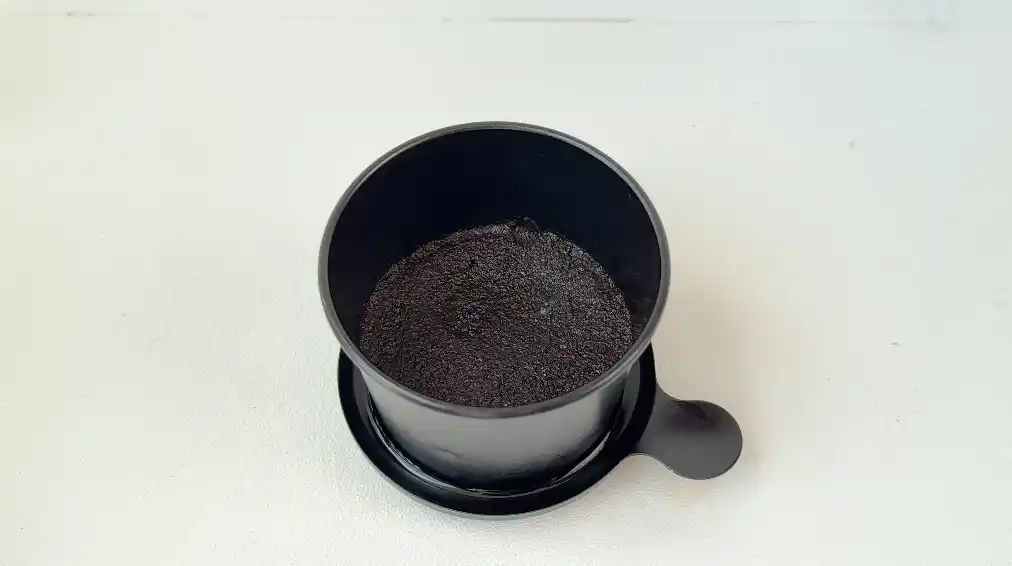
This “bloom” process allows the coffee to expand, release CO2, and prepare for optimal extraction. It’s the secret to achieving rich, aromatic coffee without harsh bitterness.
Step 4: Extract the Coffee
- After the coffee has bloomed evenly, place the press filter on top and press down gently with moderate force (don’t press too hard)
- Add the remaining 60ml of hot water into the phin
- Cover with the lid and wait for the coffee to drip through
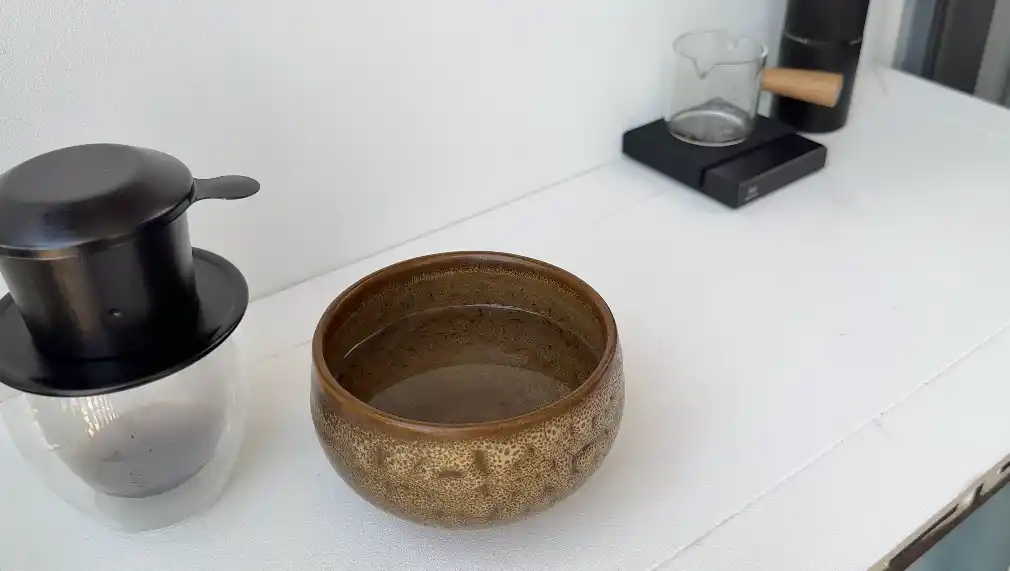
The heat retention secret: While waiting for the coffee to drip (5-7 minutes), place your cup in a bowl of hot water. The surrounding hot water bath keeps both the condensed milk and coffee warm, while also “softening” the condensed milk for easier mixing. This is my go-to method on cold days for a perfectly hot cup every time.
Step 5: Stir and Enjoy
Once all the coffee has dripped through, remove the phin. Use a spoon to stir thoroughly, blending the condensed milk with the coffee to create a rich, aromatic, steaming hot brown coffee.
How to Enjoy It Properly
Vietnamese hot coffee isn’t meant to be gulped down. Sip it slowly, holding each sip in your mouth for a few seconds before swallowing. This allows you to fully appreciate the aroma and rich depth of the coffee.
In Vietnam, people often enjoy hot coffee with crispy bread, called “chấm” (dipping). But don’t use soft sandwich bread! Try these instead:
- Vietnamese baguette: Crispy crust, airy crumb
- Saltine crackers: Crunchy, lightly salted
The crispy texture soaking up the bittersweet coffee is an experience you can’t miss.
Choosing the Right Cup for Heat Retention
Unlike iced coffee, served in tall clear glasses to showcase the beautiful layers, hot Vietnamese coffee needs good heat retention. Use a thick ceramic cup or double-walled glass.
Vietnamese Hot Coffee
Ingredients
Equipment
Method
- Preheat EquipmentFill a large bowl with hot waterSubmerge your cup and phin filter in the hot water for 30-60 secondsRemove and shake off excess water
- Add Condensed MilkPour 25g (about 1.5 tablespoon) sweetened condensed milk into the bottom of your preheated cupMake sure the milk is at room temperature, not cold from the fridge
- Prepare the PhinPlace the phin filter on top of your cupAdd 20g of medium-coarse ground coffee into the phin chamberGently shake the phin to level the coffee ground
- Bloom the CoffeePour 30ml of hot water into the phin, make sure all the coffee grounds are evenly wetted, cover with the phin lid.Wait 40 seconds, you'll see the coffee "bloom" and expand
- Press and ExtractAfter blooming, place the press filter (the perforated disc) on top of the groundsPress down gently with moderate, even pressure, don't force itPour the remaining 60ml of hot water into the phin, cover with the lid immediately
- The Hot Water BathPlace your cup (with phin on top) into the bowl of hot water, the water should come up about halfway up the cupLet the coffee drip slowly, this should take 5-7 minutesThe hot water bath keeps everything warm and softens the condensed milk
- Stir and ServeOnce all the coffee has dripped through, carefully remove the phinStir thoroughly with a spoon until the condensed milk is fully blended with the coffeeThe color should be a rich, uniform brownServe immediately while hot
Notes
- Grind size matters: Too fine = bitter and over-extracted. Too coarse = weak and watery. Aim for medium-coarse (like coarse sand or sea salt).
- Don’t over-press: Press the filter gently. Too much pressure blocks the flow and creates bitterness.
- Room temperature milk: Cold condensed milk from the fridge becomes thick and sticky, it won’t mix smoothly. Let it sit out for 15-20 minutes before brewing.
- Drip rate: The coffee should drip at about 1 drop per second. If it’s too fast, your grind is too coarse or you didn’t press enough. If it’s too slow, your grind is too fine or you pressed too hard.
- Hot water bath is key: This is what separates a lukewarm cup from a perfectly hot one. Don’t skip this step on cold days!
Frequently Asked Questions
Can I use regular coffee instead of Vietnamese coffee?
You can, but the taste won’t be the same. Vietnamese coffee (usually Robusta) is stronger, more bitter, and less acidic. The closest substitutes are French roast or espresso blends. If you’re in the US, look for Café Du Monde or Nguyen Coffee Supply.
Why shouldn’t I use cold condensed milk?
When condensed milk is cold, it becomes sticky and hard to dissolve. The hot water bath doesn’t just keep the coffee warm—it also “softens” the condensed milk, making the mixing process smoother and releasing more of the milk’s aroma.
Can I use regular milk instead of condensed milk?
You’ll lose the signature sweetness and creamy richness. If you must, use whole milk + sugar, but it won’t be the authentic version.
My coffee tastes too bitter. What am I doing wrong?
Your grind might be too fine, or you’re pressing the filter too hard. Use a medium-coarse grind for best results.