What is Vietnamese coffee?

For Vietnamese people, coffee is more than just a beverage, it’s an integral part of lifestyle and culture. You’ll encounter a Vietnamese person holding a coffee cup while heading to work, sipping it during their workday, or sitting at a roadside café enjoying it with friends. As a Vietnamese native, let me tell you about Vietnamese coffee and the cultural stories surrounding it.
What is it?
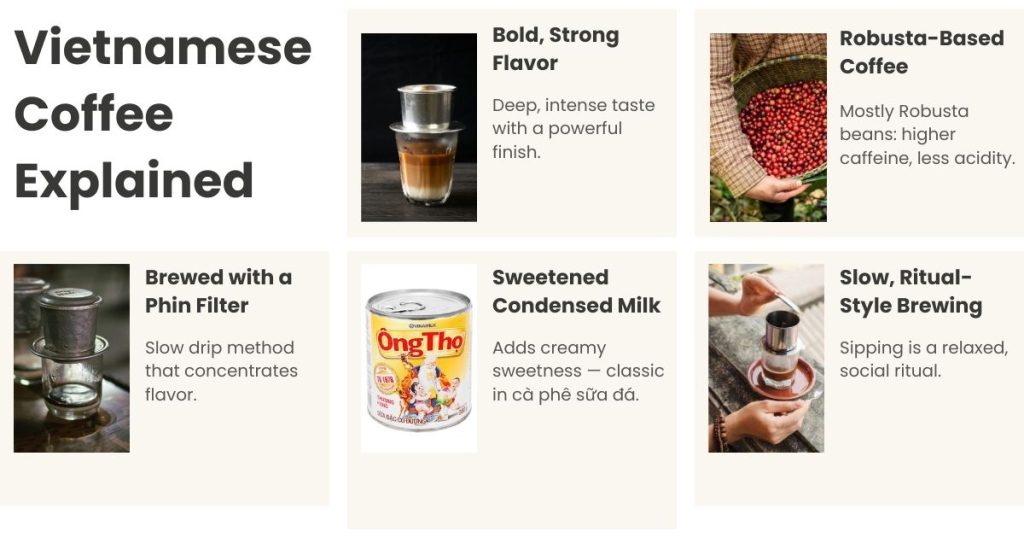
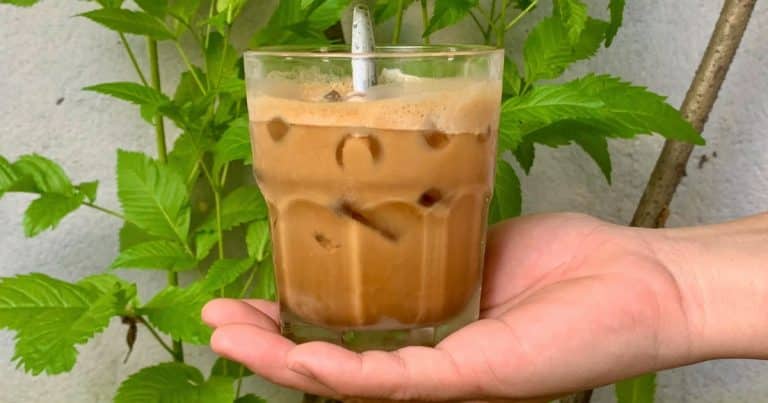
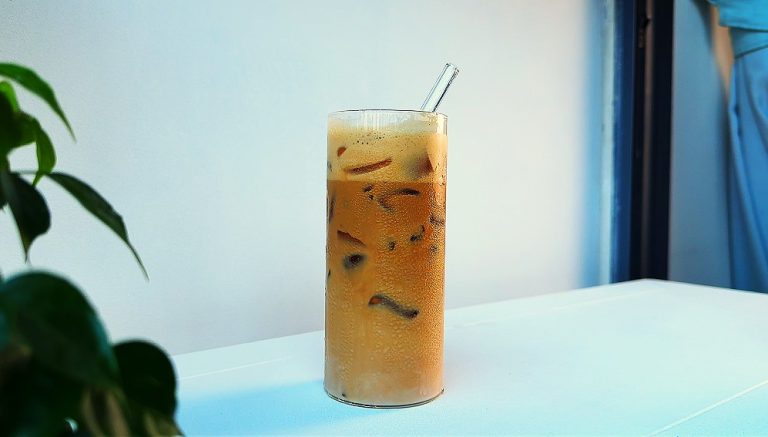
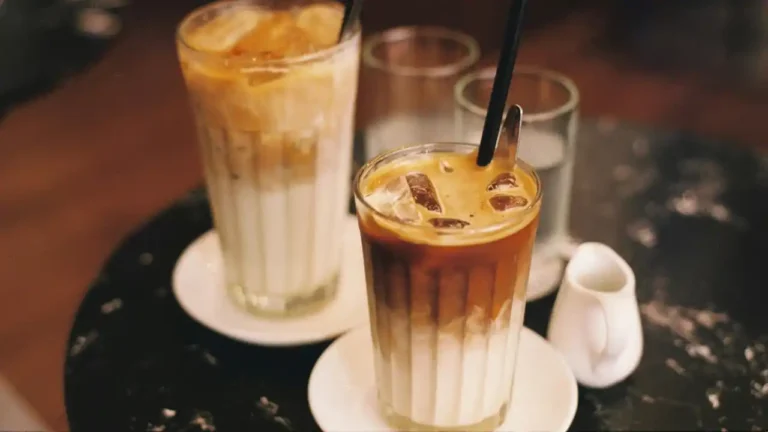
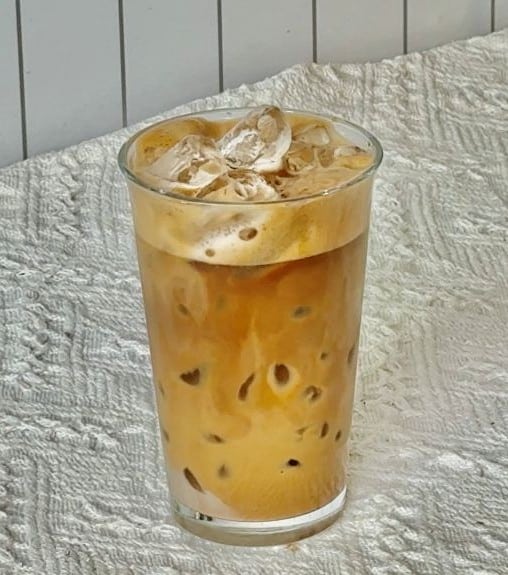
Vietnamese coffee is brewed using a distinctive Vietnamese recipe. It primarily uses locally-grown dark-roasted Robusta beans, combined with the slow-drip phin filter method, then mixed with sweetened condensed milk and ice to create a rich, aromatic flavor.
Why is it different?
Unlike any other brewing method or coffee flavor in the world, Vietnamese coffee focuses on a stronger, thicker, darker coffee experience, very different from Arabica’s “smooth & bright” profile. This distinctiveness comes from three key factors:
The Beans
Vietnamese people primarily use Robusta beans, which are twice as strong as Arabica, delivering a bitter, thick, and earthy flavor. The coffee is dark-roasted, sometimes with a touch of butter or caramel, creating an intense aroma and natural crema.
Phin Brewing
Instead of machines, Vietnamese use a drip filter (phin) (usually made of aluminum or stainless steel), with each drop extracting slowly like a ritual. The result is strongly extracted, concentrated coffee with a thick texture.
Sweet, Creamy, and Bold Flavor
Vietnamese often mix their coffee with sweetened condensed milk (called Ca Phe Sua Da). When combined with condensed milk, the coffee becomes sweet, creamy, and bold, just enough to wake you up while remaining pleasant. This is what makes Vietnamese coffee beloved by so many.
How to Brew Vietnamese Coffee
Origin & History of Vietnamese Coffee
History
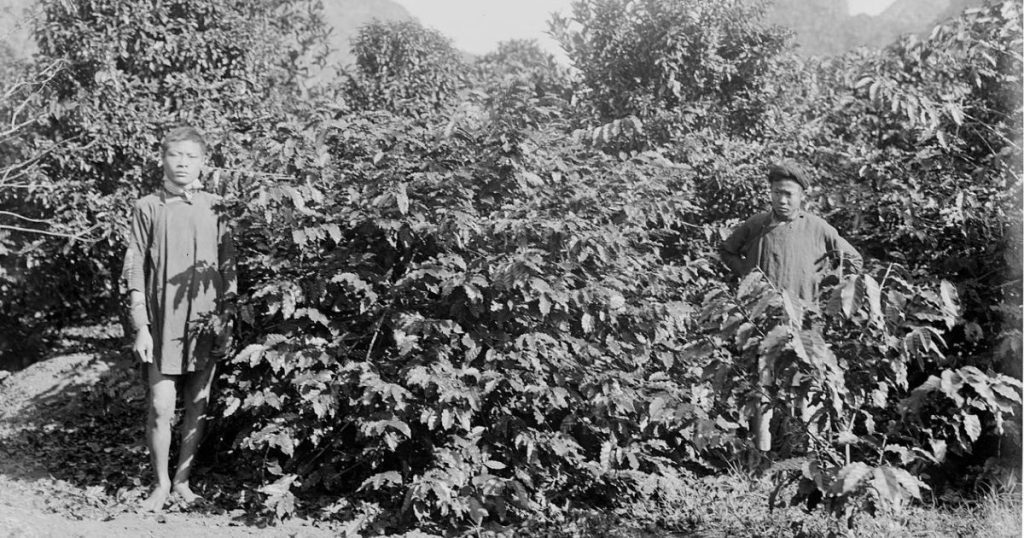
The first introduction of coffee was documented in 1857 when a French Catholic priest brought an Arabica tree to northern Vietnam. Though successful in his endeavors, it wasn’t until the early 1900s that the Robusta bean made its way to the country’s central highlands, where the region’s climate and soil provide optimal coffee-growing conditions. Over the coming decades, the industry would boom as plantations sprung up all over Dak Lak province and its surrounding areas. Currently, Dak Lak is famous for having the largest coffee cultivation area and production in the country, accounting for about 30-35% of national production
Popular Coffee Beans
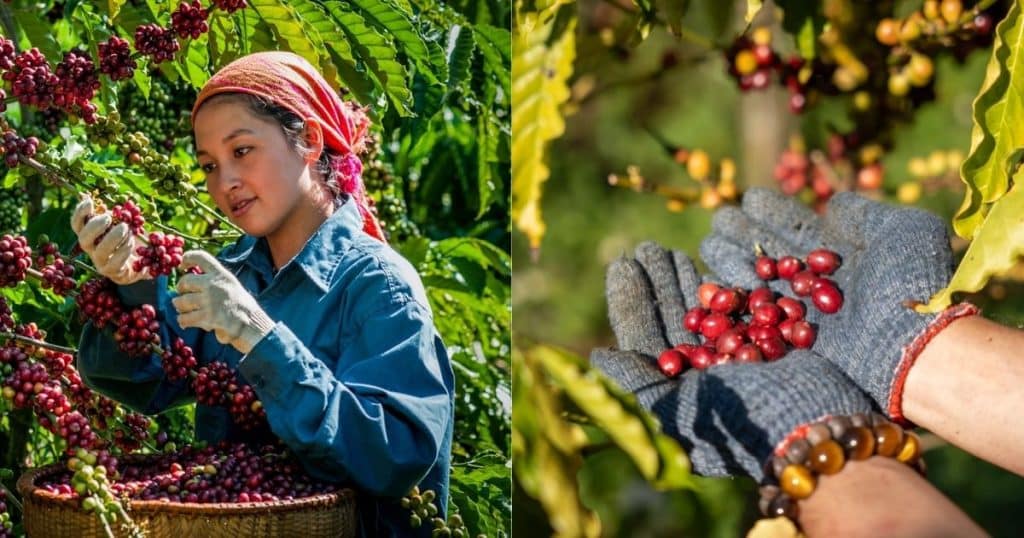
Vietnam has two main types of coffee: Arabica and Robusta. Robusta accounts for the largest production, mainly grown in the Central Highlands, famous for its strong bitter taste and high caffeine content—this is also the primary type used for making Iced Milk Coffee.
Robusta Coffee:
- Common growing altitude: Below 1000m above sea level
- Suitable growing temperature: 24°C to 29°C
Arabica Coffee:
- Common growing altitude: 800m to 1500m above sea level
- Suitable growing temperature: 15°C to 24°C
Cultivation and Harvesting Methods
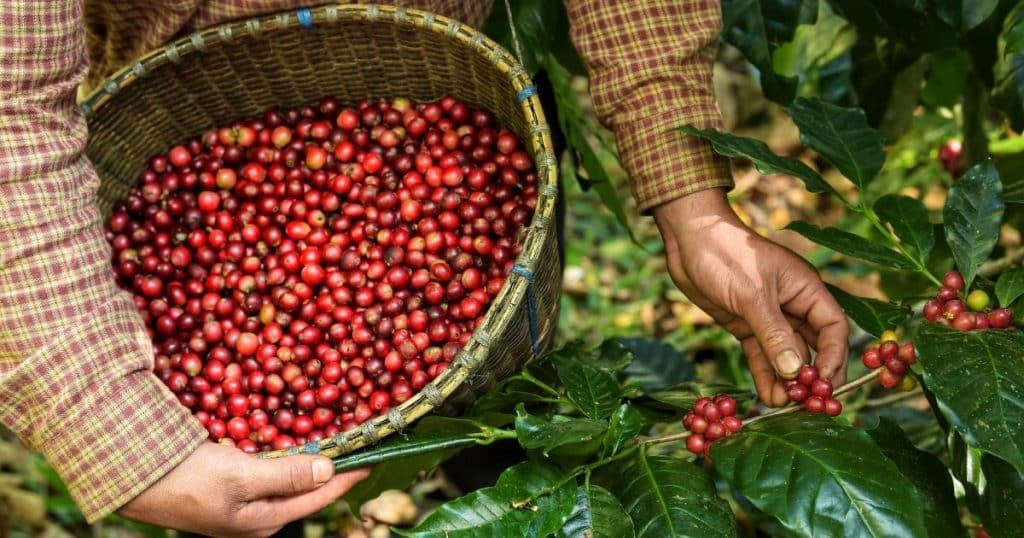
In many Vietnamese coffee-growing regions, farmers still maintain traditional harvesting methods.
After planting seeds or seedlings, Robusta trees typically take 3-4 years to start flowering and bearing fruit.
They then hand-pick each ripe cherry to ensure uniformity in flavor. After harvesting, the coffee is naturally sun-dried on brick courtyards or raised drying racks, helping preserve the natural aroma of the coffee beans.
However, with increasingly stringent global market demands, Vietnam’s coffee industry has entered a period of strong transformation. Many cooperatives, businesses, and farming households have invested in:
- Clean and organic farming systems – minimizing chemical fertilizers and pesticides, reusing coffee husks as microbial fertilizer
- International certifications like Fair Trade, Rainforest Alliance, UTZ – ensuring products meet environmental standards, workers’ rights, and clear traceability
- Modern roasting and grinding processes, applying Italian or Japanese technology, allowing precise control of temperature and roasting time to the second to preserve full flavor
Thanks to this, Vietnamese coffee isn’t just limited to raw material exports but is gradually upgrading its production chain value—from “agricultural coffee beans” to “specialty coffee products” with brands and clear origin stories.
Production and Export
Vietnam is the world’s second-largest coffee producer and exporter, after Brazil. Coffee is not only a key agricultural sector but also a source of cultural and economic pride for the country.
Vietnamese coffee is exported to over 80 countries including the US, Germany, Japan, Italy, and South Korea.
Beyond raw coffee beans, Vietnam is gradually shifting toward exporting processed products such as:
- Roasted coffee
- Instant coffee
- Specialty coffee
How Vietnamese People Drink Coffee
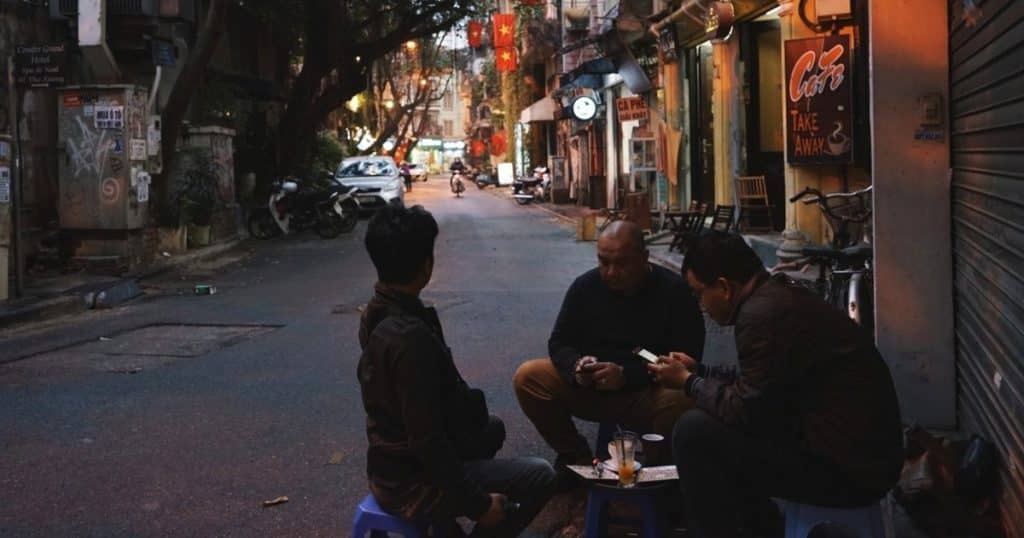
In Vietnam, drinking coffee isn’t just about staying awake, it’s a cultural habit and a way of life.
Vietnamese typically brew coffee using a phin filter, dripping slowly into the cup. This “slowness” creates the soul of Vietnamese coffee, people don’t rush, but sit down, chat, or simply watch the world go by. For me, iced milk coffee is an essential part of starting an energetic morning.
In the morning, sidewalk coffee shops are packed with people, from laborers to office workers. Each person has their iced milk coffee or iced black coffee, both strong and aromatic. In the afternoon, coffee becomes a “reason” to meet friends, discuss business, or simply sit and think.
The price for each cup of coffee here ranges from 15,000 VND to 30,000 VND (approximately $0.60 to $1.15)
The ways to drink are diverse:
- Iced milk coffee (Ca phe sua da) – strong, sweet, refreshing, the symbol of Vietnam
- Iced black coffee – bold and pure, for those who love the true bitter taste
- Egg coffee, salt coffee, bac xiu… – unique variations showcasing creativity in Vietnamese coffee culture
For Vietnamese people, a cup of coffee is a moment to slow down, to savor the aroma, taste, and life itself—not just a morning beverage.
Vietnamese Coffee Variations
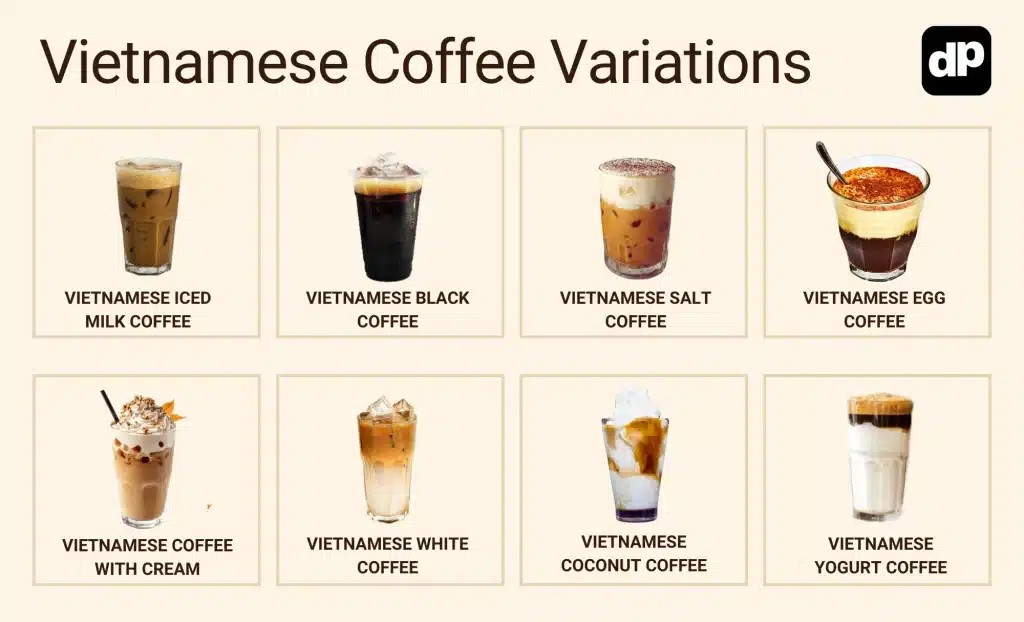
Below are popular Vietnamese coffee variations, there are actually more than 20 types. I’ve tried them all, and in the end, my true love remains Iced Milk Coffee 🙂
|
Type |
English Translation |
Description |
|---|---|---|
|
Cà phê sữa đá |
Vietnamese Iced Milk Coffee |
Strong phin-brewed coffee combined with sweetened condensed milk, then served over ice. Strong, sweet-creamy, and characteristically Vietnamese. |
|
Cà phê đen |
Vietnamese Black Coffee |
Pure phin coffee without milk, can be served hot or cold. Strong flavor, slightly bitter, commonly consumed in the morning for alertness. |
|
Cà phê muối |
Vietnamese Salt Coffee |
Phin-brewed coffee with a light salted milk cream layer on top, creating a unique sweet-salty harmony. Originated in Hue, now very popular among young people. |
|
Cà phê trứng |
Vietnamese Egg Coffee |
Strong coffee topped with whipped egg cream mixed with condensed milk, creating a smooth, creamy sensation like tiramisu. A Hanoi specialty. |
|
Cà phê kem |
Vietnamese Coffee with Cream |
Phin or espresso coffee topped with fresh cream or milk cream, creating a smooth sensation and balancing bitter-creamy flavors. |
|
Bạc xỉu |
Vietnamese White Coffee (Bac Xiu) |
A “sweeter and lighter” version of iced milk coffee: more condensed milk, less coffee. Very popular with coffee beginners. |
|
Cà phê cốt dừa |
Vietnamese Coconut Coffee |
Combines strong phin coffee with rich coconut cream and condensed milk, creating a fragrant, creamy, refreshing flavor, famous from Cong Caphe. |
|
Cà phê sữa chua |
Vietnamese Yogurt Coffee |
Strong phin coffee mixed with lightly fermented yogurt, balancing sour-sweet-bitter flavors, unique and easy to drink. |